Showing posts with label Percival. Show all posts

Friday, December 05, 2025

ENION'S LAMENTS

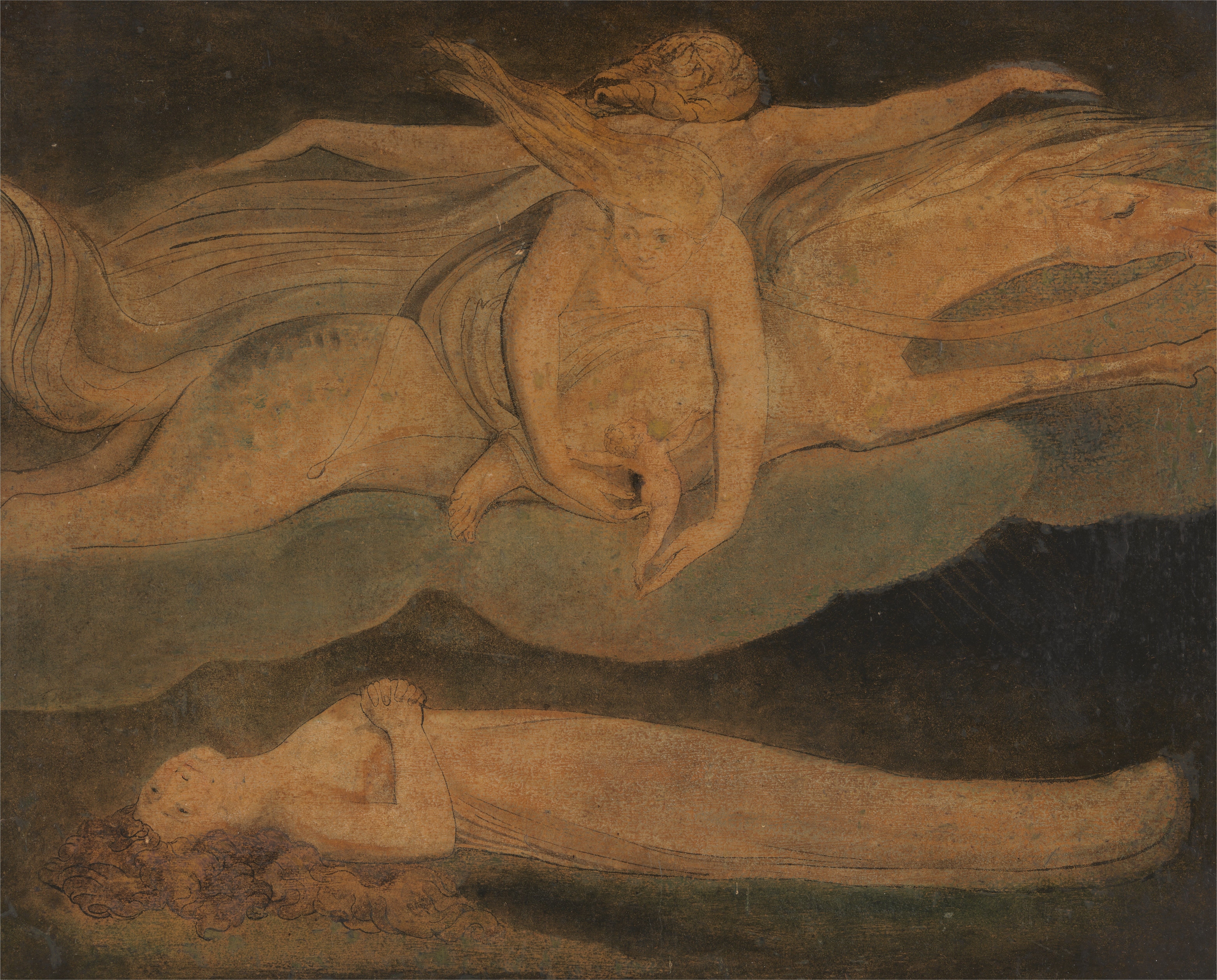
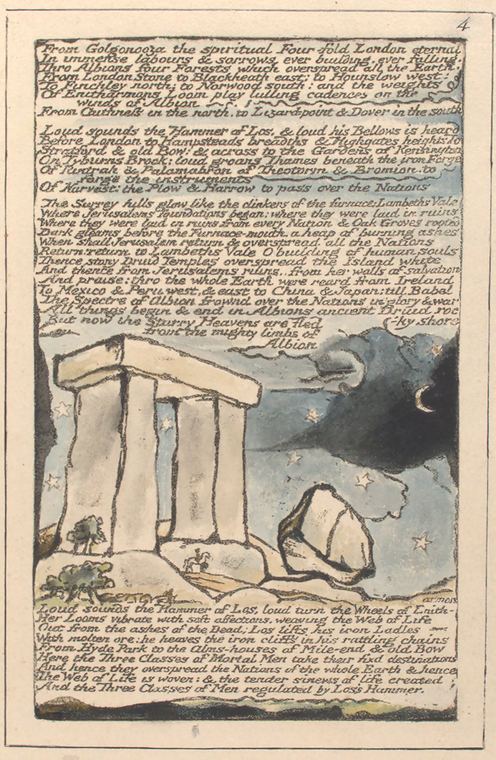
Original in British Library
Four Zoas, Night i
Page 6
Enion Asleep

WHY

Night the First

Four Zoas, Page 17-18 (E 310) Night the First, Line1

Post Lament i

https://ramhornd.blogspot.com/2019/04/lament-i.html


PRICE OF EXPERIENCE

Night the Second

Four Zoas, Page 35-36 (E 324) Night the Second, Line 1

Post Lament ii

https://ramhornd.blogspot.com/2019/04/lament-ii.html


THARMAS I HAVE LOST THEE

Night the Third

Four Zoas, Page 45 (E 329) Night the ThirdLine 2 ff

Post Lament iii  AI has seen fit to alter this link - use the URL below to reach the post

https: //ramhornd.blogspot.com/2019/05/lament-iii.html


MORTAL GENTLY FADES AWAY

Night the Eighth

Four Zoas, Page 113-4 (E 383) Night the Eighth, Line 13 

Post Lament iv

https://ramhornd.blogspot.com/2019/05/lament-iv.html

________________________________________________

Four Zoas, Night III, Page 45, (E 329)
"These are the words of Enion heard from the cold waves of despair

O Tharmas I had lost thee. & when I hoped I had found thee
O Tharmas do not thou destroy me quite but let
A little shadow. but a little showery form of Enion
Be near thee loved Terror. let me still remain & then do thou
Thy righteous doom upon me. only let me hear thy voice           
Driven by thy rage I wander like a cloud into the deep
Where never yet Existence came, there losing all my life
I back return weaker & weaker, consume me not away
In thy great wrath. tho I have sinned. tho I have rebelld
Make me not like the things forgotten as they had not been       
Make not the thing that loveth thee. a tear wiped away

Tharmas replied riding on storms his voice of Thunder rolld" 
Enion, the Emanation of Tharmas or the body, represents the generative instinct. She is the material expression of the instictive functioning of the physical body. Enion flees from Tharmas as a result of their quarrel over his awakening sexual instinct. Before they separate they procreate the infants Los and Enitharmon. Their children form the world by embodying the qualities Time and Space.

In William Blake's Circle of Destiny by Milton O Percival we learn of the cycle which Tharmas and Enion are following:
 
"There are two co-operating principles, one formative and intellectual, the other recipient and material." (Page 257) 

"This is the procession downward and outward - from mind to matter, from light to darkness, from reason to unreason, from the One to the Many. The return procession - upward and inward - recovers, step by step, what has been lost." (Page 259)

"As the Zoas fall, the physical world undergoes changes correspondent to those in the spiritual world. The fall is allegorized. The Divine Vision is replaced by the "Dark Religions"; the eternal world by the mortal world. Enion in her mortal state is the mortal body that "originated with the Fall and was called Death and cannot be removed but by a Last Judgment." As Albion sinks into doubt and unbelief, she descends, as a mental concept, from her spiritual and immortal state as far as nonentity itself, that blank, invisible, intangible, basic matter of ancient metaphysics...In this role she becomes the "dark consumer," an "eternal consummeration," the purveyor of Los's "vegetable fires." But all things are redemed in Christ, his advent brings to Enion the hope of release." (Page 266)

First Corinthians 15
[9] For I am the least of the apostles, that am not meet to be called an apostle, because I persecuted the church of God.
[10] But by the grace of God I am what I am: and his grace which was bestowed upon me was not in vain; but I laboured more abundantly than they all: yet not I, but the grace of God which was with me.
[11] Therefore whether it were I or they, so we preach, and so ye believed.
[12] Now if Christ be preached that he rose from the dead, how say some among you that there is no resurrection of the dead?
[13] But if there be no resurrection of the dead, then is Christ not risen:
[14] And if Christ be not risen, then is our preaching vain, and your faith is also vain.
[15] Yea, and we are found false witnesses of God; because we have testified of God that he raised up Christ: whom he raised not up, if so be that the dead rise not.
[16] For if the dead rise not, then is not Christ raised:
[17] And if Christ be not raised, your faith is vain; ye are yet in your sins.
[18] Then they also which are fallen asleep in Christ are perished.
[19] If in this life only we have hope in Christ, we are of all men most miserable.
[20] But now is Christ risen from the dead, and become the firstfruits of them that slept.
[21] For since by man came death, by man came also the resurrection of the dead.
[22] For as in Adam all die, even so in Christ shall all be made alive.


Wednesday, June 26, 2024

DESCENT

'The Descent of Man into the Vale of Death: 'But Hope Rekindled, Only to Illume the Shades of Death, and Light Her to the Tomb'

Blake Archive
Robert Blair's The Grave

All that Blake wrote was a exploration of his own psyche and an invitation to us to look within ourselves. Blake knew that individuals are not consciously aware of the motivations that drive them to choose death rather than life, devolution rather than evolution. He was motivated to look at the forces within himself which struggled with one another instead of cooperating to produce a healthy wholeness. He wrote in order to expose the unseen to the light of consciousness.

To accomplish such a feat one must enter the repository of the dark secrets, shattering fears, and rejected sinfullness which one conceals from others and from  oneself. One must descend from the light of day into hidden passages where one encounters the unknown.  
  
In William Blake's Circle of Destiny, Milton O Percival, wrote of the process through which Blake made his readers familiar with the stages on the journey through which individuals travel as they experience life: 

Page 219
"The Course of experience, which is at once the course of error and the process by which Satan is revealed and regeneration is accomplished, is in the hands of Los and Enitharmon.

Page 228
The struggle between the masculine and the feminine contraries - the struggle between mind and emotions, between reason and sense, between Spectre and Emanation, betweeen the inner and the outer in every sense - constitutes a trial by fire, a spiritual purgation. In Blake's fires, as in the fires of alchemy, the feminine cotrary is purified first. If man fell by woman, it is by woman that he is redeemed. The feminine emotions, driven to desperation by the increasing severity of the rational mind turn from vengence to forgiveness in their own defense. In The Four Zoas Enitharmon's change of heart seems to be brought about by the suffering of the bound Orc and her own fear of a God of Mystery... [T]he emotions have been driven by the doubting rational mind into such narrow and cruel forms, such perversions of their true nature, that a sudden conversion is induced...Redeemed from error's power, the female unites herself again with her masculine contrary." 

Jerusalem, Plate 7, (E 149)
"And thus the Spectre spoke: Wilt thou still go on to destruction?
Till thy life is all taken away by this deceitful Friendship?    
He drinks thee up like water! like wine he pours thee
Into his tuns: thy Daughters are trodden in his vintage
He makes thy Sons the trampling of his bulls, they are plow'd
And harrowd for his profit, lo! thy stolen Emanation
Is his garden of pleasure! all the Spectres of his Sons mock thee
Look how they scorn thy once admired palaces! now in ruins
Because of Albion! because of deceit and friendship!"
Jerusalem, Plate 7, (E 150) 
"Los answer'd. Altho' I know not this! I know far worse than this:
I know that Albion hath divided me, and that thou O my Spectre,
Hast just cause to be irritated: but look stedfastly upon me:
Comfort thyself in my strength the time will arrive,
When all Albions injuries shall cease, and when we shall         
Embrace him tenfold bright, rising from his tomb in immortality.
They have divided themselves by Wrath. they must be united by
Pity: let us therefore take example & warning O my Spectre,
O that I could abstain from wrath! O that the Lamb
Of God would look upon me and pity me in my fury.                
In anguish of regeneration! in terrors of self annihilation:
Pity must join together those whom wrath has torn in sunder,
And the Religion of Generation which was meant for the destruction
Of Jerusalem, become her covering, till the time of the End.
O holy Generation! [Image] of regeneration! 
O point of mutual forgiveness between Enemies!
Birthplace of the Lamb of God incomprehensible!
The Dead despise & scorn thee, & cast thee out as accursed:
Seeing the Lamb of God in thy gardens & thy palaces:
Where they desire to place the Abomination of Desolation." 
Jerusalem, Plate 9, (E 152)
"Every Emanative joy forbidden as a Crime:
And the Emanations buried alive in the earth with pomp of religion:          
Inspiration deny'd; Genius forbidden by laws of punishment:
I saw terrified; I took the sighs & tears, & bitter groans:
I lifted them into my Furnaces; to form the spiritual sword.
That lays open the hidden heart: I drew forth the pang
Of sorrow red hot: I workd it on my resolute anvil:              
I heated it in the flames of Hand, & Hyle, & Coban
Nine times; Gwendolen & Cambel & Gwineverra
Are melted into the gold, the silver, the liquid ruby,
The crysolite, the topaz, the jacinth, & every precious stone,
Loud roar my Furnaces and loud my hammer is heard:               
I labour day and night, I behold the soft affections
Condense beneath my hammer into forms of cruelty
But still I labour in hope, tho' still my tears flow down.
That he who will not defend Truth, may be compelld to defend
A Lie: that he may be snared and caught and snared and taken     
That Enthusiasm and Life may not cease: arise Spectre arise!

Thus they contended among the Furnaces with groans & tears;
Groaning the Spectre heavd the bellows, obeying Los's frowns;
Till the Spaces of Erin were perfected in the furnaces
Of affliction, and Los drew them forth, compelling the harsh Spectre.         
Plate 10
Into the Furnaces & into the valleys of the Anvils of Death
And into the mountains of the Anvils & of the heavy Hammers
Till he should bring the Sons & Daughters of Jerusalem to be
The Sons & Daughters of Los that he might protect them from
Albions dread Spectres; storming, loud, thunderous & mighty      
The Bellows & the Hammers move compell'd by Los's hand."

Tuesday, January 02, 2024

WHOLENESS

 Reposted from Nov 12, 2010 

Jerusalem, PLATE 63, (E 213)
"Jehovah stood among the Druids in the Valley of Annandale
When the Four Zoas of Albion, the Four Living Creatures, the Cherubim
Of Albion tremble before the Spectre, in the starry likeness of the Plow
Of Nations. And their Names are Urizen & Luvah & Tharmas & Urthona"

Milton Percival, author of William Blake's Circle of Destiny, was capable of revealing psychological meaning in Blake's poetry and pictures. He understood that Blake was depicting internal dynamics as he presented his Four Mighty ones in the one giant body of Albion.

On page 20 we read:
"It is in his presentation of the Zoas that much of the power of Blake's myth lies. They are not the bloodless abstractions common to allegory. Blake believed in them. They are in consequence realities of the imagination, with power to terrify us as they terrified their creator. No other poet has given us so profound a sense of the helplessness of man before the primal forces of life; and no other poet, so passionate a denial of that helplessness. He fears these forces, because he sees them as demonic, with power over him; but he takes hope from the fact that these forces are in him - that they are himself. When man shall have brought them again into harmony, they will become his willing servants."

Jung touches on several of the same paradigms of psychic development as does Percival in this passage from his Psychological Commentary in Tibetan Book of the Dead, Edited by W. Y. Evans-Wentz:

"Fear of self-sacrifice lurks deep in every ego, and this fear is often only [of] the precariously controlled demand of the unconscious forces to burst out in full strength. No one who strives for selfhood (individuation) is spared this dangerous passage, for that which is feared also belongs to the wholeness of the self -- the sub-human, or supra-human world of psychic ‘dominants’ (archetypes) from which the ego originally emancipated itself with enormous effort, and then only partially, for the sake of a more or less illusory freedom. This liberation is certainly a very necessary and very heroic undertaking, but it represents nothing final: it is merely the creation of a subject, who, in order to find fulfillment, has still to be confronted by an object. This [object], at first sight, would appear to be the world, which is swelled out with projections for that very purpose. Here we seek and find our difficulties, here we seek and find our enemy, here we seek and find what is dear and precious to us; and it is comforting to know that all evil and all good is to be found out there, in the visible object, where it can be conquered, punished, destroyed, or enjoyed. But nature herself does not allow this paradisal state of innocence to continue for ever. There are, and always have been, those who cannot help but see that the world and its experiences are in the nature of a symbol, and that it really reflects something that lies hidden in the subject himself, in his own trans-subjective reality."

In the beginning of the Book of Urizen Blake expresses a recognition of the disturbance in the psyche which has given power to a force which is 'Obscure, shadowy, void, solitary.' He gladly hears the call to have the 'dark visions of torment' revealed to him.

Urizen, PLATE 2, (E 74)
"PRELUDIUM TO THE [FIRST] BOOK OF URIZEN

Of the primeval Priests assum'd power,
When Eternals spurn'd back his religion;
And gave him a place in the north,
Obscure, shadowy, void, solitary.

Eternals I hear your call gladly,
Dictate swift winged words, & fear not
To unfold your dark visions of torment."

Entering in the dark, unknown aspects of the psyche changes the occupation of the mind to the experience of emotional states which are both pleasant and painful and which appear to be outside of the mind.

Jerusalem, Plate 68, (E 222)
"Sometimes I curse & sometimes bless thy fascinating beauty
Once Man was occupied in intellectual pleasures & energies
But now my soul is harrowd with grief & fear & love & desire
And now I hate & now I love & Intellect is no more:
There is no time for any thing but the torments of love & desire
The Feminine & Masculine Shadows soft, mild & ever varying
In beauty: are Shadows now no more, but Rocks in Horeb"

To be torn asunder, to be under the control of your own wrath, to experience fury, anguish and terror - these are the 'far worse' things of which Los and Blake know. But they know too that Albion will be made whole.

Jerusalem, Plate 7, (E 150)
"Los answer'd. Altho' I know not this! I know far worse than this:
I know that Albion hath divided me, and that thou O my Spectre,
Hast just cause to be irritated: but look stedfastly upon me:
Comfort thyself in my strength the time will arrive,
When all Albions injuries shall cease, and when we shall
Embrace him tenfold bright, rising from his tomb in immortality.
They have divided themselves by Wrath. they must be united by
Pity: let us therefore take example & warning O my Spectre,
O that I could abstain from wrath! O that the Lamb
Of God would look upon me and pity me in my fury.
In anguish of regeneration! in terrors of self annihilation:
Pity must join together those whom wrath has torn in sunder,
And the Religion of Generation which was meant for the destruction
Of Jerusalem, become her covering, till the time of the End."

The reunification of Albion, the archetype of the complete (individuated) individual and of the undivided mankind, restores the connection between humanity and the 'Universal Father' in 'Infinitude.'

Jerusalem, PLATE 97, (E 256)
Jerusalem, Plate 99

"Awake! Awake Jerusalem! O lovely Emanation of Albion
Awake and overspread all Nations as in Ancient Time
For lo! the Night of Death is past and the Eternal Day
Appears upon our Hills: Awake Jerusalem, and come away

So spake the Vision of Albion & in him so spake in my hearing
The Universal Father. Then Albion stretchd his hand into Infinitude."


Monday, March 28, 2022

Mythical


Larry Clayton's Primer, Chapter 10

      Many people have called William Blake unique among English poets as the creator of a complete mythology. In a standard dictionary "without foundation in fact" appears as the fifth meaning of 'mythical', but this is probably what the term conveys in common parlance. Therefore we must begin our study of Blake's myth by raising our consciousness of the word. 'Logos', 'myth', 'epic'--these three words have common roots. In literary and theological language myths are statements about the non-material ultimate. Some people of course avoid the non-material, considering it to be "without foundation in fact"; it's doubtful that any such reader has endured to this point of our study.

       Blake considered the non-material to be the real; his art centered around the endeavour to express the reality of the non-material. The meaning of his entire artistic enterprise we may call his myth. His object was to fit all of experience into a total framework of meaning that will inform life and "to raise other people to a perception of the Infinite". Our object is to grasp that total framework; once we do that, we have a myth of meaning.

With his story of the Prodigal Son, Jesus gave us a personal paradigm of the history of the Chosen People and of the Human Race. 

Luke 15
[10] Likewise, I say unto you, there is joy in the presence of the angels of God over one sinner that repenteth.
[11] And he said, A certain man had two sons:
[12] And the younger of them said to his father, Father, give me the portion of goods that falleth to me. And he divided unto them his living.
[13] And not many days after the younger son gathered all together, and took his journey into a far country, and there wasted his substance with riotous living.
[14] And when he had spent all, there arose a mighty famine in that land; and he began to be in want.
[15] And he went and joined himself to a citizen of that country; and he sent him into his fields to feed swine.
[16] And he would fain have filled his belly with the husks that the swine did eat: and no man gave unto him.
[17] And when he came to himself, he said, How many hired servants of my father's have bread enough and to spare, and I perish with hunger!
[18] I will arise and go to my father, and will say unto him, Father, I have sinned against heaven, and before thee,
[19] And am no more worthy to be called thy son: make me as one of thy hired servants.
[20] And he arose, and came to his father. But when he was yet a great way off, his father saw him, and had compassion, and ran, and fell on his neck, and kissed him.
[21] And the son said unto him, Father, I have sinned against heaven, and in thy sight, and am no more worthy to be called thy son.
[22] But the father said to his servants, Bring forth the best robe, and put it on him; and put a ring on his hand, and shoes on his feet:
 

[23] And bring hither the fatted calf, and kill it; and let us eat, and be merry:

[24] For this my son was dead, and is alive again; he was lost, and is found. And they began to be merry.

A striking modern analogy, although not Blakean per se, is provided by the cycle of alcoholism: progressive deterioration until the sufferer hits bottom, followed by recovery. Blake did use as a recurring motif the story of Lazarus found in the Gospel of John.

Luke 11
[1] Now a certain man was sick, named Lazarus, of Bethany, the town of Mary and her sister Martha.
[2] (It was that Mary which anointed the Lord with ointment, and wiped his feet with her hair, whose brother Lazarus was sick.)
[3] Therefore his sisters sent unto him, saying, Lord, behold, he whom thou lovest is sick.
[4] When Jesus heard that, he said, This sickness is not unto death, but for the glory of God, that the Son of God might be glorified thereby.

But the primary paradigm of this myth is the Incarnation, Crucifixion, Resurrection, and Ascension of Christ. However Blake did not express this, probably did not fully realize it, until 1800. 

Galations 2
[20] I am crucified with Christ: nevertheless I live; yet not I, but Christ liveth in me: and the life which I now live in the flesh I live by the faith of the Son of God, who loved me, and gave himself for me.

The next Chapter illustrates the application of this fundamental myth in Blake's major poetic works. The development of Blake's epic will be traced through the various stages of his spiritual journey. In essence it's the same journey we all take; you could call it the history of Man. Blake called it the Circle of Destiny in Night 1 of The Four Zoas.

Four Zoas, Night I, Page 5, (E 302)
"Enion said Farewell I die I hide. from thy searching eyes
So saying--From her bosom weaving soft in Sinewy threads
A tabernacle for Jerusalem she sat among the Rocks        
Singing her lamentation. Tharmas groand among his Clouds
Weeping, then bending from his Clouds he stoopd his innocent head 
And stretching out his holy hand in the vast Deep sublime        
Turnd round the circle of Destiny with tears & bitter sighs
And said.     Return O Wanderer when the Day of Clouds is oer

So saying he sunk down into the sea a pale white corse"
There are no easy solutions. There are no shortcuts to a more direct path. 
Milton O Percival in William Blake's Circle of Destiny understood that Blake taught that entrenched error destroys the possibility of return.
"But if in Beulah the error deepens and the circuit of return is closed, 
then the wheel has to swing "downwards and outwards," over a greatly 
expanded periphery, into the worlds of Ulro and Generation. For the 
punishment for error in Blake's system as in life itself lies in the 
bitter experience of error. When man decides, as he does in Beulah, 
without yet realizing the import of his decision, to live the outward, 
the passive, the feminine, the selfish, and the rational, he must be 
delivered over into the reality of his dream world in order that he may 
know it and renounce it. For experience, in Blake's system is remedial. 
Error runs its course. The spiritual body, like the natural body, labors
to throw off infection and in the end succeeds. The path of experience 
is therefore circular. When the error which may be described as Nature 
or Natural Religion becomes formulated in  man's mind, the cycle over 
which it is destined to run takes shape and begins to move. This cycle, 
which descends from Beulah into Ulro and ascends from Ulro by way of 
Generation into Beulah, where it joins the supernal cycle, is the Circle
of Destiny." 
Jerusalem, Plate 41 [46], (E 188) 
"Thou art in Error Albion, the Land of Ulro:               
One Error not remov'd, will destroy a human Soul
Repose in Beulahs night, till the Error is remov'd
Reason not on both sides. Repose upon our bosoms
Till the Plow of Jehovah, and the Harrow of Shaddai
Have passed over the Dead, to awake the Dead to Judgment.     
But Albion turn'd away refusing comfort." 
 

Wednesday, October 13, 2021

LARGE COLOR PRINTS 12

Yale Center for British Art
Large Color Printed Drawings
Pity

LARGE COLOR PRINTS 12

BLAKE'S PITY

IMAGE OF PITY

IMAGE OF PITY ii

Letters, To Flaxman, (E 707)
"Now my lot in the Heavens is this; Milton lovd me in childhood & shewd me his face Ezra came with Isaiah the Prophet, but Shakespeare in riper years gave me his hand"

It is not known if this vision which goes by the name Pity was stimulated by reading words in Act I, Scene 7 of Shakespeare's Macbeth but it may have been. Blake may have resonated to Shakespeare's description of pity without associating it in his image with 'the horrid deed' and 'vaulting ambition' described in Shakespeare's passage.

Macbeth , Act 1, Scene 7
"... He's here in double trust;
First, as I am his kinsman and his subject,
Strong both against the deed; then, as his host,
Who should against his murderer shut the door,
Not bear the knife myself. Besides, this Duncan
Hath borne his faculties so meek, hath been
So clear in his great office, that his virtues
Will plead like angels, trumpet-tongued, against
The deep damnation of his taking-off;
And pity, like a naked new-born babe,
Striding the blast, or heaven's cherubim, horsed
Upon the sightless couriers of the air,
Shall blow the horrid deed in every eye,
That tears shall drown the wind. I have no spur
To prick the sides of my intent, but only
Vaulting ambition, which o'erleaps itself
And falls on the other."

The idea of pity was a recurring theme in Blake's poetry. In the Book of Urizen Los first feels pity for Urizen's suffering. The dividing which follows is like the dividing which followed the initial dividing in Genesis when God divided Heaven from Earth.

Genesis 1

[3] And God said, Let there be light: and there was light.
[4] And God saw the light, that it was good: and God divided the light from the darkness.
[5] And God called the light Day, and the darkness he called Night. And the evening and the morning were the first day.
[6] And God said, Let there be a firmament in the midst of the waters, and let it divide the waters from the waters.
[7] And God made the firmament, and divided the waters which were under the firmament from the waters which were above the firmament: and it was so.
[8] And God called the firmament Heaven. And the evening and the morning were the second day.
[9] And God said, Let the waters under the heaven be gathered together unto one place, and let the dry land appear: and it was so.
[10] And God called the dry land Earth; and the gathering together of the waters called he Seas: and God saw that it was good.

Urizen, Plate 13, (E 77) 
6. Los wept obscur'd with mourning:
His bosom earthquak'd with sighs;
He saw Urizen deadly black,                     
In his chains bound, & Pity began,

7. In anguish dividing & dividing
For pity divides the soul
In pangs eternity on eternity
Life in cataracts pourd down his cliffs         
The void shrunk the lymph into Nerves
Wand'ring wide on the bosom of night
And left a round globe of blood
Trembling upon the Void"

In Milton pity is linked with love and compassion. The pity which is the 'garment of God' urges patience not wrath. God has provided Beulah as a protection from the stresses on Eden for the female. There she may learn to express the pity and compassion which is often lacking in her.

Milton, Plate 18 [20], (E 111)

"Orc answerd. Take not the Human Form O loveliest. Take not
Terror upon thee! Behold how I am & tremble lest thou also
Consume in my Consummation; but thou maist take a Form
Female & lovely, that cannot consume in Mans consummation
Wherefore dost thou Create & Weave this Satan for a Covering[?]  
When thou attemptest to put on the Human Form, my wrath  

Burns to the top of heaven against thee in Jealousy & Fear.
Then I rend thee asunder, then I howl over thy clay & ashes
When wilt thou put on the Female Form as in times of old
With a Garment of Pity & Compassion like the Garment of God      
His garments are long sufferings for the Children of Men
Jerusalem is his Garment & not thy Covering Cherub O lovely
Shadow of my delight who wanderest seeking for the prey."
Milton, Plate 25 [27], (E 122) 
"Go forth Reapers with rejoicing. you sowed in tears
But the time of your refreshing cometh, only a little moment     
Still abstain from pleasure & rest, in the labours of eternity
And you shall Reap the whole Earth, from Pole to Pole! from Sea to Sea
Begining at Jerusalems Inner Court, Lambeth ruin'd and given
To the detestable Gods of Priam, to Apollo: and at the Asylum
Given to Hercules, who labour in Tirzahs Looms for bread    
Who set Pleasure against Duty: who Create Olympic crowns
To make Learning a burden & the Work of the Holy Spirit: Strife.
T[o] Thor & cruel Odin who first reard the Polar Caves 
Lambeth mourns calling Jerusalem. she weeps & looks abroad
For the Lords coming, that Jerusalem may overspread all Nations  
Crave not for the mortal & perishing delights, but leave them
To the weak, and pity the weak as your infant care; Break not
Forth in your wrath lest you also are vegetated by Tirzah
Wait till the Judgement is past, till the Creation is consumed
And then rush forward with me into the glorious spiritual    
Vegetation; the Supper of the Lamb & his Bride; and the
Awaking of Albion our friend and ancient companion.

So Los spoke. But lightnings of discontent broke on all sides round
And murmurs of thunder rolling heavy long & loud over the mountains
While Los calld his Sons around him to the Harvest & the Vintage."

Milton, Plate 30 [33], (E 129
"Beulah is evermore Created around Eternity; appearing
To the Inhabitants of Eden, around them on all sides.
But Beulah to its Inhabitants appears within each district       
As the beloved infant in his mothers bosom round incircled
With arms of love & pity & sweet compassion. But to
The Sons of Eden the moony habitations of Beulah,
Are from Great Eternity a mild & pleasant Rest.

And it is thus Created. Lo the Eternal Great Humanity            
To whom be Glory & Dominion Evermore Amen
Walks among all his awful Family seen in every face
As the breath of the Almighty. such are the words of man to man
In the great Wars of Eternity, in fury of Poetic Inspiration,
To build the Universe stupendous: Mental forms Creating" 
_________________________
In William Blake's Circle of Destiny, Milton O Percival makes these comments:
"Los's feminine self is Enitharmon. She is the spiritual garment of man in the Generative world, being in this respect the counterpart of Jerusalem in Eden. Now the spiritual clothing which Los desires in a troubled world is pity. But true pity, as we have seen in the discussion of Luvah and Vala, is imaginative and spontaneous, not selfish and rational...She is in all things the outer aspect of the spiritual world of which he is the impelling spirit.  
...
For a short, resplendent period Los finds her tractable. In contrition for her selfish past she weaves the 'web of life' in the looms of Cathedron. This is the new Jerusalem toward which Los has aspired. Pity has been achieved. But this period of enlightenment soon declines, and Enitharmon sinks with Los into the lethargy of the eighteen Christian centuries. During these centuries Christianity ceases to be a thing of the spirit, retaining only its Christian name. This is the 'sleep' of Enitharmon - the triumph of the recalcitrant female emotions as they are personified in Vala-Rahab."
(Page 40,41)


Friday, October 08, 2021

LARGE COLOR PRINTS 8

First posted Feb 2014

Each of the images in the Large Color Printed Drawings includes paradox. In the House of Death we confront the sorrows of disease and torture and despair as described in Milton's Paradise Lost which this image is said to represent.
 
Paradise Lost
, Book XI, Line 477
"Immediately a place
Before his eyes appeard, sad, noysom, dark,
A Lazar-house it seemd, wherein were laid
Numbers of all diseas'd, all maladies
Of gastly Spasm, or racking torture, qualmes
Of heart-sick Agonie, all feavorous kinds,
Convulsions, Epilepsies, fierce Catarrhs, Intestin Stone and Ulcer, Colic pangs,
Daemoniac Phrenzie, moaping  Melancholie
And Moon-struck madness, pining Atrophie
Marasnus and wide-wasting Pestilence,
Dropsies, and Asthma's, and Joint-racking Rheums.
Dire was the tossing, deep the groans, despair
Tended the sick busiest from Couch to Couch;
And over them triumphant Death his Dart
Shook, but delaid to strike, though oft invokt
With vows, as thir chief good, and final hope."

British Museum
Large Color Printed Drawings House of Death
 

But Blake tells us that these afflictions are of the mortal body which passes away when man is born is his spiritual body.

Vision of Last Judgment, (E 564)
"Many Persons such as Paine & Voltaire with some
of the Ancient Greeks say we will not Converse concerning Good
& Evil we will live in Paradise & Liberty   You may do so in
Spirit but not in the Mortal Body as you pretend till after the
Last Judgment for in Paradise they have no Corporeal & Mortal
Body that originated with the Fall & was calld Death & cannot be
removed but by a Last judgment while we are in the world of
Mortality we Must Suffer   The Whole Creation Groans to be
deliverd there will always be as many Hypocrites born as Honest
Men & they will always have superior Power in Mortal Things   You
cannot have Liberty in this World without what you call Moral
Virtue & you cannot have Moral Virtue without the Slavery of that
half of the Human Race who hate what you call Moral Virtue" 

Blake used the image of Nebuchadnezza when he had fallen into the form of a beast to represent man when he had fallen to the limit of his descent from Eden. This I take to be a statement about the Limit of Contraction. Man has been given the form of Adam, a human form. Taking the form of a beast was a turning point allowing him to reverse directions and recover a vision of Eternity.
 
When nature, the outer world, competes its descent it takes the form of death. Blake speaks of this as the Limit of Contraction or Satan. It is the natural or physical body which is susceptible to death. When man recognizes himself as a spirit which is immortal, he transcends the Limit of Contraction and frees himself from the power of Satan and his offspring death.

Gates of Paradise, Keys of the Gates, (E 268) 
"13 But when once I did descry The Immortal Man that cannot Die 
14 Thro evening shades I haste away To close the Labours of my Day 
15 The Door of Death I open found"

 From William Blake's Circle of Destiny by Milton O Percival, Page 233:   

"Satan and Adam have not been 'fixed,' Christ has not taken on the body of death, to make permanent the limitations of fallen man. The sexual religion will not permanently replace the Divine Vision. Such a hypothesis is the assumption of the unbeliever.

'Voltaire insinuates that these Limits are the cruel work of God
Mocking the Remover of Limits & the Resurrection of the Dead'  (E 228)
On the contrary the limits, like other fixations under Los's hammer, have their ultimate end the removal of all limitations. Christ appears in the mortal form of man that man may take on the immortal form of Christ."

Jerusalem, Plate 42, (E 189) 
"There is a limit of Opakeness, and a limit of Contraction;
In every Individual Man, and the limit of Opakeness,             
Is named Satan: and the limit of Contraction is named Adam.
But when Man sleeps in Beulah, the Saviour in mercy takes
Contractions Limit, and of the Limit he forms Woman: That
Himself may in process of time be born Man to redeem
But there is no Limit of Expansion! there is no Limit of Translucence.   
In the bosom of Man for ever from eternity to eternity.
Therefore I break thy bonds of righteousness; I crush thy messengers!
That they may not crush me and mine: do thou be righteous,
And I will return it; otherwise I defy thy worst revenge:
Consider me as thine enemy: on me turn all thy fury              
But destroy not these little ones, nor mock the Lords anointed:
Destroy not by Moral Virtue, the little ones whom he hath chosen!" 
Four Zoas, Night IV, Page 56, (E 337)
"Such were the words of Beulah of the Feminine Emanation 
The Empyrean groand throughout All Eden was darkend
The Corse of Albion lay on the Rock the sea of Time & Space
Beat round the Rock in mighty waves & as a Polypus
That vegetates beneath the Sea the limbs of Man vegetated      
In monstrous forms of Death a Human polypus of Death

The Saviour mild & gentle bent over the corse of Death
Saying If ye will Believe your Brother shall rise again   
And first he found the Limit of Opacity & namd it Satan
In Albions bosom for in every human bosom these limits stand     
And next he found the Limit of Contraction & namd it Adam
While yet those beings were not born nor knew of good or Evil

Then wondrously the Starry Wheels felt the divine hand. Limit
Was put to Eternal Death Los felt the Limit & saw
The Finger of God touch the Seventh furnace in terror            
And Los beheld the hand of God over his furnaces
Beneath the Deeps in dismal Darkness beneath immensity" 
_______________________________________  


Romans 8 
18] I consider that the sufferings of this present time are not worth comparing with the glory that is to be revealed to us.
[19] For the creation waits with eager longing for the revealing of the sons of God; 
[20] for the creation was subjected to futility, not of its own will but by the will of him who subjected it in hope; 
[21] because the creation itself will be set free from its bondage to decay and obtain the glorious liberty of the children of God. 
[22] We know that the whole creation has been groaning in travail together until now; 
[23] and not only the creation, but we ourselves, who have the first fruits of the Spirit, groan inwardly as we wait for adoption as sons, the redemption of our bodies. 

First Corinthians 15
[21] For as by a man came death, by a man has come also the resurrection of the dead. 
[22] For as in Adam all die, so also in Christ shall all be made alive.  
[23] But each in his own order: Christ the first fruits, then at his coming those who belong to Christ. 
[24] Then comes the end, when he delivers the kingdom to God the Father after destroying every rule and every authority and power. 
[25] For he must reign until he has put all his enemies under his feet. 
[26] The last enemy to be destroyed is death.


Wednesday, May 26, 2021

BLAKE & WHOLENESS

Reposted from Nov 12, 2010 

Jerusalem, PLATE 63, (E 213)
"Jehovah stood among the Druids in the Valley of Annandale
When the Four Zoas of Albion, the Four Living Creatures, the Cherubim
Of Albion tremble before the Spectre, in the starry likeness of the Plow
Of Nations. And their Names are Urizen & Luvah & Tharmas & Urthona"

Milton Percival, author of William Blake's Circle of Destiny, was capable of revealing psychological meaning in Blake's poetry and pictures. He understood that Blake was depicting internal dynamics as he presented his Four Mighty ones in the one giant body of Albion.

On page 20 we read:
"It is in his presentation of the Zoas that much of the power of Blake's myth lies. They are not the bloodless abstractions common to allegory. Blake believed in them. They are in consequence realities of the imagination, with power to terrify us as they terrified their creator. No other poet has given us so profound a sense of the helplessness of man before the primal forces of life; and no other poet, so passionate a denial of that helplessness. He fears these forces, because he sees them as demonic, with power over him; but he takes hope from the fact that these forces are in him - that they are himself. When man shall have brought them again into harmony, they will become his willing servants."

Jung touches on several of the same paradigms of psychic development as does Percival in this passage from his Psychological Commentary in Tibetan Book of the Dead, Edited by W. Y. Evans-Wentz:

"Fear of self-sacrifice lurks deep in every ego, and this fear is often only [of] the precariously controlled demand of the unconscious forces to burst out in full strength. No one who strives for selfhood (individuation) is spared this dangerous passage, for that which is feared also belongs to the wholeness of the self -- the sub-human, or supra-human world of psychic ‘dominants’ (archetypes) from which the ego originally emancipated itself with enormous effort, and then only partially, for the sake of a more or less illusory freedom. This liberation is certainly a very necessary and very heroic undertaking, but it represents nothing final: it is merely the creation of a subject, who, in order to find fulfillment, has still to be confronted by an object. This [object], at first sight, would appear to be the world, which is swelled out with projections for that very purpose. Here we seek and find our difficulties, here we seek and find our enemy, here we seek and find what is dear and precious to us; and it is comforting to know that all evil and all good is to be found out there, in the visible object, where it can be conquered, punished, destroyed, or enjoyed. But nature herself does not allow this paradisal state of innocence to continue for ever. There are, and always have been, those who cannot help but see that the world and its experiences are in the nature of a symbol, and that it really reflects something that lies hidden in the subject himself, in his own trans-subjective reality."

In the beginning of the Book of Urizen Blake expresses a recognition of the disturbance in the psyche which has given power to a force which is 'Obscure, shadowy, void, solitary.' He gladly hears the call to have the 'dark visions of torment' revealed to him.

Urizen, PLATE 2, (E 74)
"PRELUDIUM TO THE [FIRST] BOOK OF URIZEN

Of the primeval Priests assum'd power,
When Eternals spurn'd back his religion;
And gave him a place in the north,
Obscure, shadowy, void, solitary.

Eternals I hear your call gladly,
Dictate swift winged words, & fear not
To unfold your dark visions of torment."

Entering in the dark, unknown aspects of the psyche changes the occupation of the mind to the experience of emotional states which are both pleasant and painful and which appear to be outside of the mind.

Jerusalem, Plate 68, (E 222)
"Sometimes I curse & sometimes bless thy fascinating beauty
Once Man was occupied in intellectual pleasures & energies
But now my soul is harrowd with grief & fear & love & desire
And now I hate & now I love & Intellect is no more:
There is no time for any thing but the torments of love & desire
The Feminine & Masculine Shadows soft, mild & ever varying
In beauty: are Shadows now no more, but Rocks in Horeb"

To be torn asunder, to be under the control of your own wrath, to experience fury, anguish and terror - these are the 'far worse' things of which Los and Blake know. But they know too that Albion will be made whole.

Jerusalem, Plate 7, (E 150)
"Los answer'd. Altho' I know not this! I know far worse than this:
I know that Albion hath divided me, and that thou O my Spectre,
Hast just cause to be irritated: but look stedfastly upon me:
Comfort thyself in my strength the time will arrive,
When all Albions injuries shall cease, and when we shall
Embrace him tenfold bright, rising from his tomb in immortality.
They have divided themselves by Wrath. they must be united by
Pity: let us therefore take example & warning O my Spectre,
O that I could abstain from wrath! O that the Lamb
Of God would look upon me and pity me in my fury.
In anguish of regeneration! in terrors of self annihilation:
Pity must join together those whom wrath has torn in sunder,
And the Religion of Generation which was meant for the destruction
Of Jerusalem, become her covering, till the time of the End."

The reunification of Albion, the archetype of the complete (individuated) individual and of the undivided mankind, restores the connection between humanity and the 'Universal Father' in 'Infinitude.'

Jerusalem, PLATE 97, (E 256)
Jerusalem, Plate 99

"Awake! Awake Jerusalem! O lovely Emanation of Albion
Awake and overspread all Nations as in Ancient Time
For lo! the Night of Death is past and the Eternal Day
Appears upon our Hills: Awake Jerusalem, and come away

So spake the Vision of Albion & in him so spake in my hearing
The Universal Father. Then Albion stretchd his hand into Infinitude."


Tuesday, September 10, 2019

BLAKE'S STARS

New York Public Library
Milton 

Plate 4
There are the sun, the moon, the stars and the planets; the sources of light in the mundane world. The sun is associated with reason or Urizen, one of the four aspects of the Eternal Man. The aspect we call emotion was the precinct of Luvah or the moon, a passive source of light which provided repose or rest from the severe contentions of reason. But the balance was broken and Urizen fell, splitting his light into factions, the stars, which provide dim light. As remnants of reason, the stars form a chain of rationality expressed as law which restrains the fall of man into the abyss. The planets are the wanderers among the constellations of the Zodiac.  

Four Zoas, Night II, Page 33, (E 321)
"For the Divine Lamb Even Jesus who is the Divine Vision
Permitted all lest Man should fall into Eternal Death

For when Luvah sunk down himself put on the robes of blood
Lest the state calld Luvah should cease. & the Divine Vision
Walked in robes of blood till he who slept should awake
Thus were the stars of heaven created like a golden chain
To bind the Body of Man to heaven from failing into the Abyss
Each took his station, & his course began with sorrow & care
In sevens & tens & fifties, hundreds, thousands, numberd all
According to their various powers. Subordinate to Urizen
And to his sons in their degrees & to his beauteous daughters
Travelling in silent majesty along their orderd ways
In right lined paths outmeasurd by proportions of number weight
And measure. mathematic motion wondrous. along the deep"

William Blake's Circle of Destiny by Milton Percival, on Page 148, visualizes Blake's process of using astronomical symbols in the fall of Albion:

"When the starry mundane shell crashes into the darkness of the abyss, the planets moving irregularly eastward, made their appearance. To counteract their maleficent influence Los creates a temporal sun and a temporal moon, feeble but indispensable replicas of their eternal counterparts.

The first diminution of light is indicated as we have just said, by the star world. This world was created to keep the body of man from falling into the abyss, when both the sun and moon had failed. When knowledge ceased to be intuitive and love ceased to be spontaneous, when, in astrological imagery, the departure of Urizen, the sun, into the north (the realm sacred to Urthona), and of Luvah, the moon, into the south (the realm sacred to Urizen), the diminished reason became Albion's guiding light. Out of fear it built the world of law that Albion might not descend into chaos. The ordered world of constellations is Blake's beautiful and appropriate symbol for the order imposed by law upon a world from which unity had fled. The symbol draws an added value from the Stoics' association of the stars with reason's ethereal fires. The star world of the law is the great rational achievement."   

.

Monday, August 22, 2016

BLAKE'S SUN II

The idea of a spiritual sun did not originate with Blake. It was passed down to him from Antiquity through the heterodox tradition of Paracelsus, Boheme, and Swedenborg. Speculation about the role of the sun in philosophical and religious systems goes back to Plato, the Egyptians, the Persians.

In The Esoteric Tradition G. de Purucker makes this statement about what Blake called the spiritual sun:

"As every scholar knows, there were a number of quasi-religious and quasi-mystical sects flourishing at about the time of the alleged beginning of the Christian era, who had pretty much the same body of ideas connected with the divine cosmic sun that the Mithraists and the Christians held. The Manichaeans were an association of mystical and in some points even esoteric thinkers, and who were widely disseminated over the Roman Empire as well as in the Hither East. They held certain beliefs linking them with the more mystical ideas of primitive Christianity, and said that the divine sun was the source of the individual christos-spirit in man, which latter is a ray of that cosmic christos. The Christian Fathers Theodoret and Cyril of Jerusalem attest this fact of Manichaean belief; and Pope Leo I called the "Great," in his Sermon XXXIV on the Epiphany (IV), stated that the Manichaeans placed the Christos of men in the [luminous substance of the invisible] sun. Such significant ideas were widely spread in the world at the time of the formation of the Christian faith and ecclesiastic system.

Of course, this view of the divine sun was not Christian only. This wonderful conception of the indwelling cosmic divinity is as old as it is universal and was the very soul of the inner meaning of ancient Greek and Latin, Persian and Mesopotamian, as well as Egyptian and Hindu religions and philosophies."

Blake assimilated the idea of a spiritual sun into his thought but more importantly, he experienced it through his own spiritual sensitivity.
 

Letters, To Butts, (E 722) 
"Then Los appeard in all his power
     In the Sun he appeard descending before
     My face in fierce flames in my double sight
     Twas outward a Sun: inward Los in his might

     "My hands are labourd day & night"
     "And Ease comes never in my sight"
     "My Wife has no indulgence given"
     "Except what comes to her from heaven"
     "We eat little we drink less"
     "This Earth breeds not our happiness"
     "Another Sun feeds our lifes streams"
     "We are not warmed with thy beams"
     "Thou measurest not the Time to me"
     "Nor yet the Space that I do see"
     "My Mind is not with thy light arrayd"
     "Thy terrors shall not make me afraid"

     When I had my Defiance given
     The Sun stood trembling in heaven
     The Moon that glowd remote below
     Became leprous & white as snow
     And every Soul of men on the Earth
     Felt affliction & sorrow & sickness & dearth
     Los flamd in my path & the Sun was hot
     With the bows of my Mind & the Arrows of Thought
     My bowstring fierce with Ardour breathes
     My arrows glow in their golden sheaves
     My brothers & father march before
     The heavens drop with human gore

     Now I a fourfold vision see
     And a fourfold vision is given to me
     Tis fourfold in my supreme delight
     And three fold in soft Beulahs night
     And twofold Always.  May God us keep
     From Single vision & Newtons sleep" 
Blake's mastery of the dynamics of discerning the 'sun' as referring to multiple mental experiences, allowed him to people his myth with entities who moved through various transformations. Urizen and Luvah represented forces which struggled to manifest the light of consciousness in the mind of man. Each desired the position of supremacy occupied by Urthona as the connection between man and the divine. When Urizen was dormant, Luvah became ascendant. Perhaps if they worked together they could assume more power. But their plot failed and shook up the delicate mental balance necessary for smooth operation of the mind. When they became warring factions, the mind was split into two paths demanding irreconcilable goals. Urizen denied expression to the instinctual emotions of humanity. Luvah subverted the restraints which the rational mind sought to impose.

Light, Blake perceived, could not be claimed exclusively by any partial entity. Its presence must be recognized and appreciated in the functioning of disparate actions.
Four Zoas, Night I, Page 10, (E 305)
"Urizen sleeps in the porch 
Luvah and Vala woke & flew up from the Human Heart 
Into the Brain; from thence upon the pillow Vala slumber'd.
And Luvah siez'd the Horses of Light, & rose into the Chariot of Day"
 
Four Zoas, Night I ,Page 21, (E 311)
"But Urizen awoke & Luvah woke & thus conferrd

Thou Luvah said the Prince of Light behold our sons & daughters  
Reposd on beds. let them sleep on. do thou alone depart
Into thy wished Kingdom where in Majesty & Power
We may erect a throne. deep in the North I place my lot
Thou in the South listen attentive. In silent of this night
I will infold the Eternal tent in clouds opake while thou       
Siezing the chariots of the morning. Go outfleeting ride
Afar into the Zenith high bending thy furious course
Southward with half the tents of men inclosd in clouds
Of Tharmas & Urthona. I remaining in the porches of the brain
Will lay my scepter on Jerusalem the Emanation
On all her sons & on thy sons O Luvah & on mine    
Till dawn was wont to wake them then my trumpet sounding loud
Ravishd away in night my strong command shall be obeyd
For I have placd my centinels in stations each tenth man
Is bought & sold & in dim night my Word shall be their law    
PAGE 22  
Luvah replied Dictate to thy Equals. am not I
The Prince of all the hosts of Men nor Equal know in Heaven
If I arise into the Zenith leaving thee to watch
The Emanation & her Sons the Satan & the Anak
Sihon and Og. wilt thou not rebel to my laws remain             
In darkness building thy strong throne & in my ancient night
Daring my power wilt arm my sons against me in the Atlantic
My deep   My night which thou assuming hast assumed my Crown
I will remain as well as thou & here with hands of blood
Smite this dark sleeper in his tent then try my strength with thee 

While thus he spoke his fires reddend oer the holy tent 
Urizen cast deep darkness round him silent brooding death
Eternal death to Luvah. raging Luvah pourd
The Lances of Urizen from chariots. round the holy tent
Discord began & yells & cries shook the wide firmament"
 
British Museum
Small Book of Designs
from Book of Urizen
"Fearless tho in pain/I travel on"
Within the minds of men and within the societies man creates, there occur shifts in the balance of dominance. When the 'Horses of Light' are controlled by the superego we encounter a man locked in restrictive patterns of behavior, or a society integrated around the pursuits of law and order. If the needs of the id are not being fed by this arrangement there will be outbursts of protests attempting to cast off the old regimes.

On Page 73 of William Blake's Circle of Destiny Milton O Percival states:
"Though Los's labors are too often unsuccessful, he provides such illumination as the mortal world has. He is the purveyor of its religions and its philosophies.


'If the Sun & Moon should doubt,
They'd immediately go out.'
Auguries of Innocence, (E 492)

This is what happens with the Fall. Urizen, the sun, and Luvah, the moon, of the supernal world, both fall into doubt and suffer extinction of their light. To replace these darkened luminaries Los hammers the remnants of Urizen's light into a temporal sun and creates the moon of Ulro, dismal substitutes both of them for their supernal counterparts, yet they serve to light a world of darkness."

Monday, May 16, 2016

READ ABOUT BLAKE

A post published by Larry in 2009 and expanded by ellie.
Wikimedia Commons
Blake's Watercolors for Poems of Thomas Gray
Ode to Spring, Page 6
People interested in Blake are more apt to read about Blake than to read Blake. Reading The Four Zoas, Milton, and Jerusalem are awesome undertakings. Until you've begun to understand the man's language, it's a losing proposition. There's a core set of metaphors that he used repeatedly, although like all metaphors his are subject to various interpretations, and often used for an object or its opposite.

To enable intelligent reading of the major prophecies there is a great abundance of commentary on his works. Where does one begin? Those of us who have made a few steps in that direction can perhaps give a bit of guidance to the beginning student.

Northrup Frye's Fearful Symmetry was the work that made me a life long lover of Blake's poetry. It's not easy; I read it five times before I was able to get more than a few glimmers of light. But it's very rewarding; you're likely smarter than me, in which case one or two readings may get you well into the long poems.

Frye was a minister of the United Church of Canada as well as celebrated literature critique; after finishing Fearful Symmetry he said that if he had it to do over, he would have written more of an introduction than what he actually did. But more than a half century after it was published Fearful Symmetry is introducing serious readers to an experience of discovery:

"Blake's cosmology, of which the symbol is Ezekiel's vision of the chariot of God with its 'wheels within wheels,' is a revolutionary vision of the universe transformed by the creative imagination of a human shape. This cosmology is not speculative but concerned, not reactionary but revolutionary, not a vision of things as they are ordered but of things as they could be ordered...Blake's poetry, like that of every poet who knows what he is doing, is mythical, for myth is the language of concern: it is cosmology in movement, a living form not a mathematical one." (Preface) 

The one who gave the simplest introduction for me was Milton Percival in William Blake's Circle of Destiny; it's more systematic and more elementary. Percival connects the myth Blake created with literature which fed its development:

"I predict, then, that when the evidence is in, it will be found that in the use of tradition Blake exceeded Milton, and was second, if to anyone, only to Dante. To be sure, a great deal of the Blakean tradition might not be called 'accepted.' It certainly was not orthodox. But the Blakean heterodoxy was equally traditional with Dante's orthodoxy. The Orphic and Pythagorean tradition, Neoplatonism in the whole of its extent, the Hermetic, kabbalistic, Gnostic, and alchemical writings, Erigena, Paracelsus, Boehme, and Swedenborg - here is a consistent body of tradition extending over nearly twenty-five hundred years. In the light of this tradition, not the light of Christian orthodoxy, Blake read his Bible, weighing and deciding for himself, formulating a 'Bible of Hell'; for he was one in whose veins ran the dissidence of dissent and the protestantism of the Protestant religion." (Page 1)    

But Kathleen Raine's Blake and Tradition was what made me a real enthusiast. That's the most easily readable one, and it's filled with some of Blake's loveliest pictures. Unfortunately Blake and Tradition is out of print now, but a fairly good substitute may be found in her little book, Blake and Antiquity or in her biography titled William Blake. Raine sees the whole of Blake's art enmeshed in the tradition which it expands: 

"Blake was such an artist; and his work, as he believed, represents 'portions of Eternity' seen in imaginative vision. Blake himself writes of 'ever Existent Images' which may be seen 'by the Imaginative Eye of Every one according to the situation he holds' - a collective archetypal world whose reality is more credible in our century that it was in his own. 'To different people it appears differently, as everything else does.' Such art comes from a source deeper than the individual experience of poet or painter, and has the power of communication to that same level of the spectator. To our superficial selves this is a source of the 'obscurity' of visionary art; to our deepest selves, of its lucidity." (Page 7)
Vision of Last Judgment, (E 560)
    "If the Spectator could Enter into these Images in his
Imagination approaching them on the Fiery Chariot of his
Contemplative Thought if he could Enter into Noahs Rainbow or
into his bosom or could make a Friend & Companion of one of these
Images of wonder which always intreats him to leave mortal things
as he must know then would he arise from his Grave then would he
meet the Lord in the Air & then he would be happy   General
Knowledge is Remote Knowledge it is in Particulars that Wisdom
consists & Happiness too.  Both in Art & in Life General Masses
are as Much Art as a Pasteboard Man is Human Every Man has Eyes
Nose & Mouth this Every Idiot knows but he who enters into &
discriminates most minutely the Manners & Intentions  the
Expression of Character in all their branches is the
alone Wise or Sensible Man & on this discrimination All Art is
founded.  I intreat then that the Spectator will attend to the
Hands & Feet to the Lineaments of the Countenances they are all
descriptive of Character & not a line is drawn without intention
& that most discriminate & particular  as Poetry admits not a
Letter that is Insignificant so Painting admits not a Grain of
Sand or a Blade of Grass  much less an Insignificant Blur or Mark"
.