Robert N. Essick edited a book of articles on William Blake's Art
and Aesthetics, titled
The Visionary Hand. Essick
contributed the essay
Blake and the Traditions of Reproduction
Engraving which explores the development of Blake's use of his
engraving techniques as an adjunct of his commitment to reconcile
contraries. Following Blake's career from his apprenticeship as a
reproductive engraver through the
Illustrations of the Book of
Job, produced near the end of his life, Essick gives visual
evidence of the application of Blake's philosophy of Art to the
meaning he conveyed in his poetic expression.
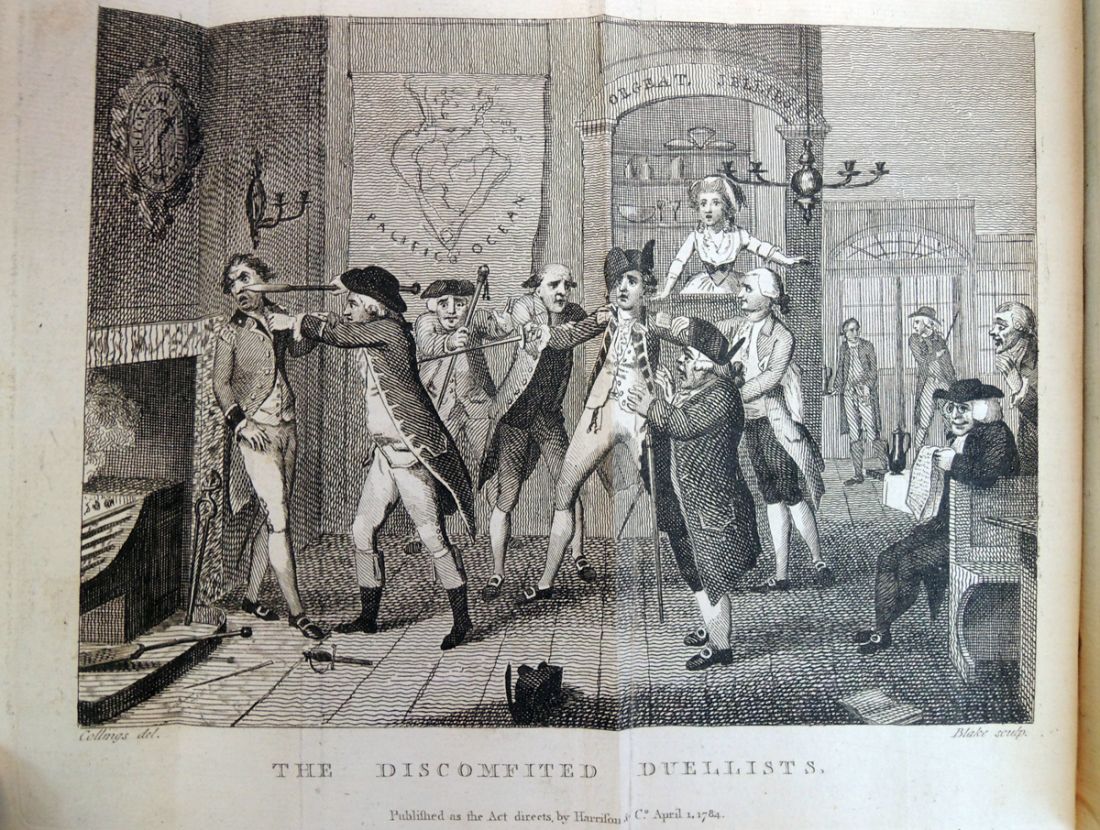
Since Blake earned his living through producing reproductions for
commercial publications, he was compelled to engrave in the accepted
style of reproductive engravers. The pictures used to illustrate
books were copies of drawings or paintings which required shading to
convey the image. The repetitive strokes created a net to convey
light and shadow, dimension and form.
Essick explains on page 499:
"The benefits derived from the eighteenth-century reproductive
system are clear. The engraver could learn a repertoire of a dozen
or so linear patterns, master their quick execution, and construct
an economically advantageous and rational system whereby several
workers, each proficient in one particular technique but all
schooled in the same basic style, could work in assembly line
fashion...All engravings so produced would be of uniform quality
acceptable to a public which had come to believe in the validity of
linear syntax as a truthful method of reproducing works of art."
...
[Blake's] revolt against this system manifests itself in three
imaginative forms:
[1] separate plates and book illustrations designed and executed for
aesthetic purposes beyond the commercial,
[2] relief etching,
[3] and prophetic narratives in which the abstracting process of
reproductive engraving become basic metaphors of a myth of creation,
fall and entrapment."
Continuing on page 517:
"I have attempted to demonstrate here that the struggle between
the commercial engraver and the visionary poet-painter must be
included among these Blakean contraries where opposition is true
friendship. I hope that I have indicated the broad outline of this
dialectical structure and a few of the more important ways it
influenced Blake's graphic art and the imagery of his poetry...It
ends with the synthesis of discordant, styles of tradition and
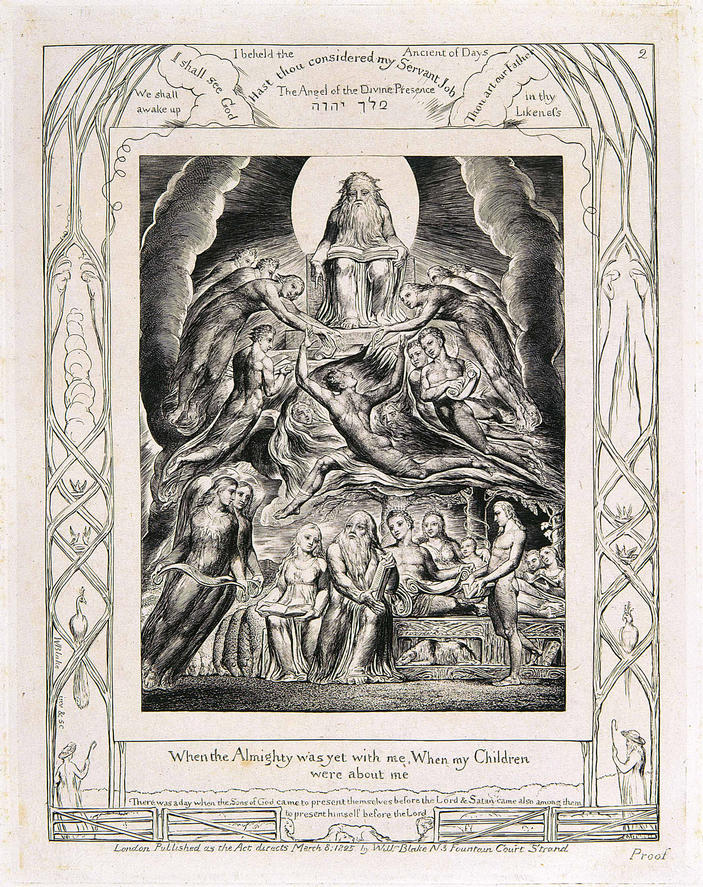
imaginative vision, that shapes the
Job engravings."
Blake knew himself to be subject to the same limitations which
prevailed in the culture in which he lived. Engraving engendered
its
own limitations including using a net of lines to give
definition to form. Blake recognized that
the net so formed
obscured the identity which might be revealed in clear, defined
outlines. As he developed he reached a point in his engraving
ability where he used the traditional engraving techniques to
convey the obscuring patterns of thought which contrasted with the
clear well-defined truth of vision or imagination. In his art he
had brought together paradoxical elements with which he struggled. "He
liberat[ed] the artist from engraving by means of engraving."
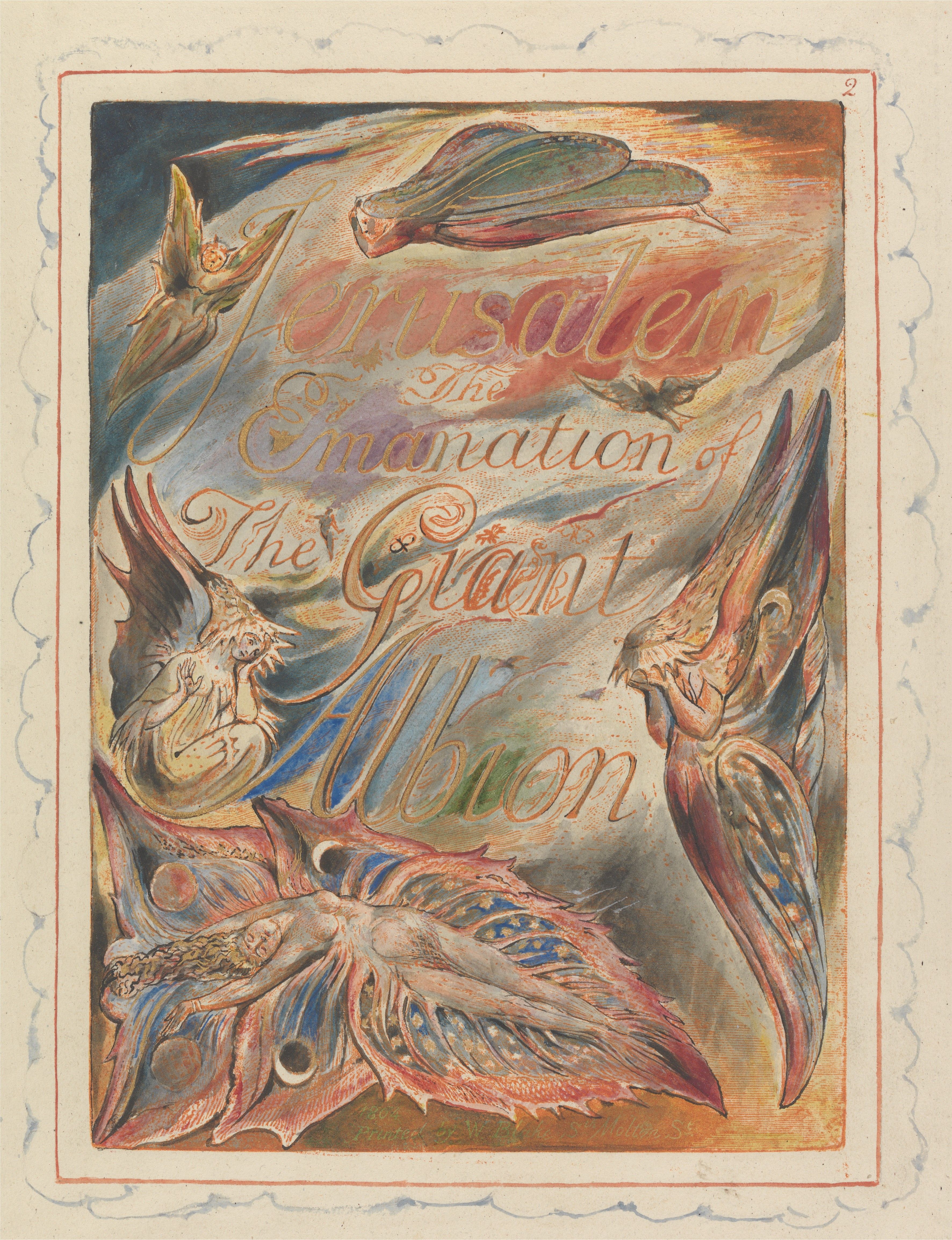
Jerusalem, Plate 12, (E 155)
Yet why despair! I saw the finger of God go forth
Upon my Furnaces, from within the Wheels of Albions Sons:
Fixing their Systems, permanent: by mathematic power
Giving a body to Falshood that it may be cast off for ever.
With Demonstrative Science piercing Apollyon with his own bow!" To see minute detail, right click on image and open in a new window, click again for even more detail. Close window to return to post.
Book of Urizen, Plate 25, (E 82)
9. And all calld it, The Net of Religion
           Chap: IX
1. Then the Inhabitants of those Cities:
Felt their Nerves change into Marrow
And hardening Bones began
In swift diseases and torments,
In throbbings & shootings & grindings
Thro' all the coasts; till weaken'd
The Senses inward rush'd shrinking,
Beneath the dark net of infection. "

Jerusalem, Plate 38 [43], (E 185)
"But here the affectionate touch of the tongue is closd in by deadly teeth
And the soft smile of friendship & the open dawn of benevolence
Become a net & a trap, & every energy renderd cruel,
Till the existence of friendship & benevolence is denied:
The wine of the Spirit & the vineyards of the Holy-One.
Here: turn into poisonous stupor & deadly intoxication:
That they may be condemnd by Law & the Lamb of God be slain!"
Jerusalem, Plate 42, (E 190)
"And Los drew his Seven Furnaces around Albions Altars
And as Albion built his frozen Altars, Los built the Mundane Shell,
In the Four Regions of Humanity East & West & North & South

Till Norwood & Finchley & Blackheath & Hounslow, coverd the whole Earth.
This is the Net & Veil of Vala, among the Souls of the Dead."

Four Zoas, Night II, Page 29, (E 319)
"The threads are spun & the cords twisted & drawn out; then the weak
Begin their work; & many a net is netted; many a net
PAGE 30
Spread & many a Spirit caught, innumerable the nets
Innumerable the gins & traps; & many a soothing flute
Is form'd & many a corded lyre, outspread over the immense
In cruel delight they trap the listeners, & in cruel delight
Bind them, condensing the strong energies into little compass"
Descriptive Catalog, PAGE 39, (E 575)
    " I do not condemn Rubens Rembrant or Titian because they did
not understand Drawing but because they did not Understand
Colouring how long shall I be forced to beat this into Mens Ears
I do not condemn Bartolozzi Strange or Woolett
because they did not understand Drawing but because they did not
understand Graving I do not condemn Pope or Dryden because they
did not understand Imagination but because they did not
understand Verse. Their Colouring Graving & Verse can never be
applied to Art     That is not either colouring Graving or Verse
which is Unappropriate to the Subject     He who makes a Design must
know the Effect & Colouring Proper to be put to that Design &
will never take that of Rubens Rembrandt or Titian to
turn that which is Soul & Life into a Mill or Machine"
Descriptive Catalog, PAGE 62, (E 576)
     "I have heard many People say Give me the Ideas.  It is no
matter what Words you put them into & others say Give me the
Design it is no matter for the Execution.  These People know
Enough of Artifice but Nothing Of Art.  Ideas cannot be Given
but in their minutely Appropriate Words nor Can a Design be made
without its minutely Appropriate Execution. The unorganized
Blots & Blurs of Rubens & Titian are not Art nor can their Method
ever express Ideas or Imaginations any more than Popes
Metaphysical jargon of Rhyming. Unappropriate Execution is the
Most nauseous affectation & foppery   He who copies does
not Execute he only Imitates what is already Executed Execution
is only the result of Invention"
 .






.jpg)