Saturday, November 11, 2023

TRUTH

Cleveland Art Museum
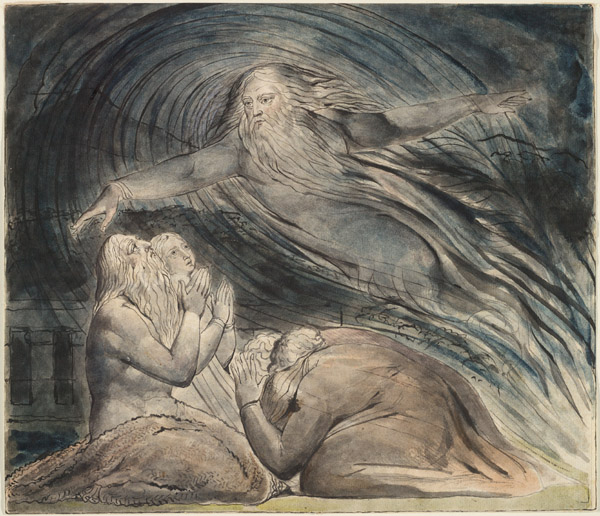
Christ in the Lap of Truth

Truth with a capital T is a poetic term not a literal term. Although it is definite and means only one thing in the abstract, it is so many faceted that it can be viewed from many perspectives. Blake could say "Every thing possible to be believ'd is an image of truth," because to believe is an act of will. To 'believe' a specific thing is to give wholehearted allegiance to what is valued most highly.

We see in the picture above a young child who, according to the title is Christ. He is not the infant Jesus as he may appear to be, but is the word made flesh who dwells within us. He sits in the lap of a woman whom he resembles. She is however, more than a woman. She is Truth herself with the appearance of a woman. Truth presents to the world, Herself reborn. Christ is the 'image of Truth new born.'

This picture is an invitation to experience rebirth by believing that the image of Truth is being born anew within. Abandon Doubt and the 'clouds or reason, 'dark disputes' and the 'endless maze.' Be not led by others who know not. Let Christ Himself be your teacher.   

Songs of Innocence and of Experience, Plate 54, (E 31)

"The Voice of the Ancient Bard. 
Youth of delight come hither:
And see the opening morn,
Image of truth new born.
Doubt is fled & clouds of reason.
Dark disputes & artful teazing.
Folly is an endless maze,
Tangled roots perplex her ways,

How many have fallen there!
They stumble all night over bones of the dead,
And feel they know not what but care
And wish to lead others, when they should be led."
Marriage of Heaven and Hell, Plate 8, (E 36)
"Every thing possible to be believ'd is an image of truth." 
Jerusalem, Plate 77, (E 231) 
"What are all the Gifts. of the Gospel, are they not
all Mental Gifts? Is God a Spirit who must be worshipped in
Spirit & in Truth and are not the Gifts of the Spirit Every-thing
to Man? O ye Religious discountenance every one among
you who shall pretend to despise Art & Science! I call upon you
in the Name of Jesus! What is the Life of Man but Art & Science?
is it Meat & Drink? is not the Body more than Raiment? What is
Mortality but the things relating to the Body, which Dies? What
is Immortality but the things relating to the Spirit, which Lives
Eternally! What is the joy of Heaven but Improvement in the
things of the Spirit? What are the Pains of Hell but Ignorance,
Bodily Lust, Idleness & devastation of the things of the
Spirit?
  Answer this to yourselves, & expel from among you those who
pretend to despise the labours of Art & Science, which alone are
the labours of the Gospel: Is not this plain & manifest to the
thought? Can you think at all & not pronounce heartily! That to
Labour in Knowledge. is to Build up Jerusalem: and to Despise
Knowledge, is to Despise Jerusalem & her Builders. 
  And remember: He who despises & mocks a Mental Gift in another;
calling it pride & selfishness & sin; mocks Jesus the giver of
every Mental Gift, which always appear to the ignorance-loving
Hypocrite, as Sins. but that which is a Sin in the sight of cruel
Man, is not so in the sight of our kind God. 
  Let every Christian as much as in him lies engage himself
openly & publicly before all the World in some Mental pursuit for
the Building up of Jerusalem" 

John 1
[12] But as many as received him, to them gave he power to become the sons of God, even to them that believe on his name:
[13] Which were born, not of blood, nor of the will of the flesh, nor of the will of man, but of God.
[14] And the Word was made flesh, and dwelt among us, (and we beheld his glory, the glory as of the only begotten of the Father,) full of grace and truth.
[15] John bare witness of him, and cried, saying, This was he of whom I spake, He that cometh after me is preferred before me: for he was before me.
[16] And of his fulness have all we received, and grace for grace.
[17] For the law was given by Moses, but grace and truth came by Jesus Christ.
John 4
[23] But the hour cometh, and now is, when the true worshippers shall worship the Father in spirit and in truth: for the Father seeketh such to worship him.
[24] God is a Spirit: and they that worship him must worship him in spirit and in truth.
John 14

[16] And I will pray the Father, and he shall give you another Comforter, that he may abide with you for ever;
[17] Even the Spirit of truth; whom the world cannot receive, because it seeth him not, neither knoweth him: but ye know him; for he dwelleth with you, and shall be in you.

John 18

[37] To this end was I born, and for this cause came I into the world, that I should bear witness unto the truth. Every one that is of the truth heareth my voice.

1 Thessalonians 2

[13] For this cause also thank we God without ceasing, because, when ye received the word of God which ye heard of us, ye received it not as the word of men, but as it is in truth, the word of God, which effectually worketh also in you that believe.

Mercy and Truth Are Met Together  
 

Sunday, November 05, 2023

PROPHET OF ETERNITY

There are events that take place in the outer world which we observe through our senses and interpret through our reason. Blake, however, looks at the inner dimension which determines the activity underlying the outer events. For this reason Blake gave each of the Zoas a name and personality in both the inner and outer worlds. Frye refers to these as their Eternal names, and their Time names:
Luvah = Orc
Urizen = Satan
Tharmas = Covering Cherub
Urthona = Los 

When Los acts as the Prophet of Eternity he is acting for Urthona to accomplish Eternal endeavors.

Binding of Urizen.

Book of Urizen, Plate 5, (E 94)

2: Upfolding his Fibres together
To a Form of impregnable strength
Los astonish'd and terrified, built                 
Furnaces; he formed an Anvil
A  Hammer of adamant then began
The binding of Urizen day and night

3: Circling round the dark Demon, with howlings
Dismay & sharp blightings; the Prophet               
Of Eternity beat on his iron links

4: And first from those infinite fires
The light that flow'd down on the winds
lie siez'd; beating incessant, condensing
The subtil particles in an Orb.                    

5: Roaring indignant the bright sparks
Endur'd the vast Hammer; but unwearied
Los beat on the Anvil; till glorious
An immense Orb of fire be fram'd"
Directing Satan to his "own station."
Milton, Plate 7, (E 101) 
Loud as the wind of Beulah that unroots the rocks & hills        
Palamabron call'd! and Los & Satan came before him
And Palamabron shew'd the horses & the servants. Satan wept,
And mildly cursing Palamabron, him accus'd of crimes
Himself had wrought. Los trembled; Satans blandishments almost 
Perswaded the Prophet of Eternity that Palamabron
Was Satans enemy, & that the Gnomes being Palamabron's friends
Were leagued together against Satan thro' ancient enmity.
What could Los do? how could be judge, when Satans self, believ'd
That he had not oppres'd the horses of the Harrow, nor the servants.  

So Los said, Henceforth Palamabron, let each his own station
Keep: nor in pity false, nor in officious brotherhood, where
None needs, be active. Mean time Palamabrons horses.
Rag'd with thick flames redundant, & the Harrow maddend with fury.
Trembling Palamabron stood, the strongest of Demons trembled:  
Curbing his living creatures; many of the strongest Gnomes,
They bit in their wild fury, who also maddend like wildest beasts

Mark well my words; they are of your eternal salvation 
Disrupting the "Eternal Hatred" and the "chain of sorrows" initiated by Urizen. 
Jerusalem, Plate 53, (E 336)
"The voice of Los compelld he labourd round the Furnaces

And thus began the binding of Urizen day & night in fear         
Circling round the dark Demon with howlings dismay & sharp blightings
The Prophet of Eternity beat on his iron links & links of brass
And as he beat round the hurtling Demon. terrified at the Shapes
Enslavd humanity put on he became what he beheld
Raging against Tharmas his God & uttering                        
Ambiguous words blasphemous filld with envy firm resolvd
On hate Eternal in his vast disdain he labourd beating
The Links of fate link after link an endless chain of sorrows" 

Damon states "Prophets are not foretellers of future facts; they are revealers of eternal truths." Blake accepted the role of prophet when he took on his Great Task of opening the Eternal Worlds to our immortal Eyes, for which I am forever grateful. He was following his hero Los who acted for Urthona who "never manifests in time" but dwells in the subconscious asserting his influence. 

Jerusalem, Plate 5, (E 147) 
"Trembling I sit day and night, my friends are astonish'd at me.
Yet they forgive my wanderings, I rest not from my great task!
To open the Eternal Worlds, to open the immortal Eyes
Of Man inwards into the Worlds of Thought: into Eternity
Ever expanding in the Bosom of God. the Human Imagination        
O Saviour pour upon me thy Spirit of meekness & love:
Annihilate the Selfhood in me, be thou all my life!
Guide thou my hand which trembles exceedingly upon the rock of ages,"
Four Zoas, Night I, Page 9, (E 305)
"His [Los'] head beamd light & in his vigorous voice was prophecy
He could controll the times & seasons, & the days & years"
Milton, Plate 24 [26], (E 121) 
"Los is by mortals nam'd Time Enitharmon is nam'd Space
But they depict him bald & aged who is in eternal youth
All powerful and his locks flourish like the brows of morning    
He is the Spirit of Prophecy the ever apparent Elias
Time is the mercy of Eternity; without Times swiftness
Which is the swiftest of all things: all were eternal torment:
All the Gods of the Kingdoms of Earth labour in Los's Halls.
Every one is a fallen Son of the Spirit of Prophecy             
He is the Fourth Zoa, that stood around the Throne Divine. 
Jerusalem, Plate 39 [44], (E 187) 
"And feeling the damps of death they with one accord delegated Los
Conjuring him by the Highest that he should Watch over them
Till Jesus shall appear: & they gave their power to Los       
Naming him the Spirit of Prophecy, calling him Elijah" 

Revelation 20
[1] And I saw an angel come down from heaven, having the key of the bottomless pit and a great chain in his hand.
[2] And he laid hold on the dragon, that old serpent, which is the Devil, and Satan, and bound him a thousand years,
[3] And cast him into the bottomless pit, and shut him up, and set a seal upon him, that he should deceive the nations no more, till the thousand years should be fulfilled: and after that he must be loosed a little season.
Harvard Art Museums/Fogg Museum 
The Angel Michael Binding Satan 
("He Cast him into the Bottomless Pit, and Shut him up") 
 

Friday, November 03, 2023

TIME & ETERNITY

First published September 2020

British Museum 
Illustrations to Young's Night Thoughts
 
Time and space are among the mind forged manacles which bind and limit us. There is a material dimension and a spiritual dimension. The matrix of the Material World is time and space. The matrix of the Spiritual World is eternity and infinity. Man being both material and spiritual has the possibility of living in both worlds. But if we confine our mental processing to sensation and rational thought, we lose the ability to pass through the portal to the infinite, eternal world of intuition and imagination.

Thanks to Blake, the image I have of Eternity is that it is not bound by sequential processing. Past, present and future are flexible. The whole can be experienced either simultaneously or distinctly. Whenever in our ordinary temporal life, we have the experience of being caught up in a moment of clarity of vision, or a realization of the connection of all things, the barrier between Time and Eternity has been breached.    
Vision of Last Judgment, (E 555)
 "This world of Imagination is the World of
Eternity it is the Divine bosom into which we shall all go after
the death of the Vegetated body   This World of Imagination is
Infinite & Eternal whereas the world of Generation or Vegetation
is Finite & Temporal      There Exist
in that Eternal World the Permanent Realities of Every Thing
which we see are reflected in this Vegetable Glass of Nature
     All Things are comprehended in their Eternal Forms in the
Divine body of the Saviour the True Vine of Eternity
The Human Imagination who appeard to Me as Coming to Judgment.
among his Saints & throwing off the Temporal that the Eternal
might be Establishd. around him were seen the Images of
Existences according to a certain order suited to my Imaginative Eye" 
Vision of Last Judgment, (E 565) 
"The Last Judgment is an Overwhelming of Bad Art & Science. 
Mental Things are alone Real what is Calld Corporeal Nobody Knows
of its Dwelling Place it is in Fallacy & its Existence an
Imposture  Where is the Existence Out of Mind or Thought Where is
it but in the Mind of a Fool.  Some People flatter themselves
that there will be No Last Judgment & that Bad Art will be
adopted & mixed with Good Art That Error or Experiment will make
a Part of Truth & they Boast that it is its Foundation these
People flatter themselves     I will not Flatter them    Error is
Created    Truth is Eternal    Error or Creation will be Burned Up &
then & not till then Truth or Eternity will appear It is Burnt up
the Moment Men cease to behold it I assert for My self that I do
not behold the Outward Creation & that to me it is hindrance &
not Action it is as the Dirt upon my feet No part of Me."  
 

Saturday, October 28, 2023

CATHERINE BLAKE

Fitzwilliam Museum
Catherine, wife of William Blake, seated by the fire 
By George Cumberland
Bequeathed (1985) by Keynes, Geoffrey

I was surprised to find this portrait of Catherine Blake by George Cumberland in the Collection of the Fitzwilliam Museum. The relationship between William Blake and George Cumberland comes to us through the letters which Blake wrote to Cumberland. The first, which was written Dec 6 1795, gave instruction on waxing a plate for a process which was familiar to both men.

Blake's final letter to Cumberland was dated April 12 1827. The two men were mutually supportive and as young men had shared experience. They were drawn apart when Cumberland inherited money and Blake struggled to make a living. However their art continued to link them over the years. The group of young supporters of the ageing Blake, who were known as the Shoreham Ancients, were brought together by Cumberland's son who introduced Linnell to Blake.

Letters, (E 699)

"G Cumberland Esqr, Bishopsgate
near Egham, Surrey

Lambeth, 6 Decembr 1795 [Postmark: 10 December]
Dear Sir
     I congratulate you not on any achievement. because I
know. that the Genius that produces. these Designs can execute
them in any manner. notwithstanding the pretended Philosophy
which teaches that Execution is the power of One & Invention of
Another--Locke says it is the same faculty that
Invents Judges, & I say he who can Invent can Execute.
  
     As to laying on the Wax it is as follows
     Take a cake of Virgins wax <([if it can be found] [if
such be]< I dont know what animal produces it>)> & stroke it
regularly over the surface of a warm Plate. (the Plate must be
warm enough to melt the Wax as it passes over) then immediately
draw a feather over it & you will get all even surface which when
cold will recieve any impression minutely
     Note   The danger is in not covering the Plate All over
     Now You will I hope shew all the family of Antique Borers,
that Peace & Plenty & Domestic Happiness is the Source of Sublime
Art, & prove to the Abstract Philosophers--that Enjoyment & not
Abstinence is the food of Intellect.
Yours sincerely
WILL BLAKE

     Health to Mr Cumberland & Family
     The pressure necessary to roll off the lines is the same
as when you print, or not quite so great.  I have not been able
to send a proof of the bath tho I have done the corrections. my
paper not being in order."

Letters, (E 782

"Mr Linnell, Cirencester Place, Fitzroy Square
15 March 1827
Dear Sir
     This is to thank you for Two Pounds now by me recievd on
account I have recievd a Letter from Mr Cumberland in which he
says he will take one Copy of Job for himself but cannot as yet
find a Customer for one but hopes to do somewhat by perseverance
in his Endeavours he tells me that it is too much Finishd or over
Labourd for his Bristol Friends as they think  I saw Mr Tatham
Senr yesterday he sat with me above an hour & lookd over the
Dante he expressd himself very much pleasd with the designs as
well as the Engravings
   I am getting on with the Engravings & hope soon to get Proofs
of what I am doing
I am dear Sir Yours Sincerely
WILLIAM BLAKE" 
Letters, (E 783)
"George Cumberland Esqre, Culver Street, Bristol
N 3 Fountain Court Strand 
12 April 1827
Dear Cumberland
     I have been very near the Gates of Death & have returned
very weak & an Old Man feeble & tottering, but not in Spirit &
Life not in The Real Man The Imagination which Liveth for Ever.
In that I am stronger & stronger as this Foolish Body decays.  I
thank you for the Pains you have taken with Poor Job.  I know too
well that a great majority of Englishmen are fond of The
Indefinite which they Measure by Newtons Doctrine of the Fluxions
of an Atom.  A Thing that does not Exist.  These are Politicians
& think that Republican Art is Inimical to their Atom.  For a
Line or Lineament is not formed by Chance a Line is a Line in its
Minutest Subdivision[s] Strait or Crooked It is Itself & Not
Intermeasurable with or by any Thing Else Such is Job but since
the French Revolution Englishmen are all Intermeasurable One by
Another Certainly a happy state of Agreement to which I for One
do not Agree.  God keep me from the Divinity of Yes & No too The
Yea Nay Creeping Jesus from supposing Up & Down to be the same
Thing as all Experimentalists must suppose
     You are desirous I know to dispose of some of my Works & to
make <them> Pleasing, I am obliged to you & to all who do so
But having none remaining of all that I had Printed I cannot
Print more Except at a great loss for at the time I printed those
things I had a whole House to range in now I am shut up in a
Corner therefore am forced to ask a Price for them that I
scarce expect to get from a Stranger.  I am now Printing a Set of
the Songs of Innocence & Experience for a Friend at Ten Guineas
which I cannot do under Six Months consistent with my other Work,
so that I have little hope of doing any more of such things. the
Last Work I produced is a Poem Entitled Jerusalem the Emanation
of the Giant Albion, but find that to Print it will Cost my Time
the amount of Twenty Guineas One I have Finishd It contains 100
Plates but it is not likely that I shall get a Customer for it
     As you wish me to send you a list with the Prices of these
things they are as follows

                                    L    s  d
     America                  6.   6. 0
     Europe                    6.   6. 0
     Visions &c               5.   5. 0
     Thel                        3.   3. 0
     Songs of Inn. & Exp.  10.  10. 0
     Urizen                     6.   6. 0

     The Little Card I will do as soon as Possible but when you
Consider that I have been reduced to a Skeleton from which I am
slowly recovering you will I hope have Patience with me.
     Flaxman is Gone & we must All soon follow every one to his
Own Eternal House Leaving the Delusive Goddess Nature & her Laws
to get into Freedom from all Law of the Members into The Mind in
which every one is King & Priest in his own House God Send it so
on Earth as it is in Heaven
I am Dear Sir Yours Affectionately
WILLIAM BLAKE "
Fitzwilliam Museum
Engraved Card
1827

Blake died August 12, 1827 at 3 Fountain Court

Blake's Disciples


Saturday, October 21, 2023

Circle of Destiny

Previously posted Nov 2013 and Sep 2016 as Sea of Time and Space.

Kathleen Raines' book Blake and Tradition is a good source for interpretation of the Cave of the Nymphs. A condensation of Raines' great work may be found in Blake and Antiquity, which contains considerable stuff on the Sea of Time and Space: 

Wikimedia Commons
Arlington Tempera - Circle of Destiny

Three things stand out prominently in this wonderful picture:

On the right is the cave of the nymphs who conduct innocent souls by the northern gate down into mortal life. Below the cave spread across the bottom is the Sea of Time and Space. On the upper left you see a representation of the Heavenly Realm.

Homer wrote about the Cave of the Nymphs in the 13th book of the Odyssey:
"At the head of this harbour there is a large olive tree, and at no great distance a fine overarching cavern sacred to the nymphs who are called Naiads. There are mixing bowls within it and wine-jars of stone, and the bees hive there.
Moreover, there are great looms of stone on which the nymphs weave their robes of sea purple--very curious to see--and at all times there is water within it. It has two entrances, one facing North by which mortals can go down into the cave, while the other comes from the South and is more mysterious; mortals cannot possibly get in by it, it is the way taken by the gods."

The Arlington Tempera contains virtually all of the items in Homer's description.  Blake faithfully followed Homer in furnishing his cave. The Naiads use the mixing bowls  and stone jars to prepare provisions for the descending souls. On the looms the nymphs  weave bodies for them; the purple indicates these bodies contain blood.


Blake loved the looms and used them repeatedly in his prophecies; in his larger prophecies
he described the "nymphs" as vicious wicked women; in fact there are pages of these wicked women. (The feminine of course connotes the earthly (under the moon), and the masculine heavenly (under the sun.) (As offensive as this may be to many readers, I don't know any help for it. It might be considered the guideline that men used in their 
subjugation of women. Blake wasn't responsible; he adopted all the ancient symbols, including this one.)

Blake's picture portrays the two realms, connected by two passages, sometimes called gates or bars or stairs. The picture shows them as stairs. The prominent gate on the right, called the northern bar, is especially rich in symbols that Blake used over and over as he wrote, etched, drew and painted.
 
Immediately to the left of the northern gate is the southern gate of 'return' where worthy mortals ascend into the higher realm of Eternity.

In the upper part of the picture the nymphs prepare souls for the descent into the "sea of time and space". The northern gate is filled with a stream, the current moving downward into the sea. Blake shows two souls scheduled for mortal life; each possesses a tub or pail which the nymphs prepared for them containing spiritual truth and power for the hazardous journey into the world.

At the bottom of the cave one of these 'women' lies in the water blissfully asleep; her tub is turned on its side, all the spiritual things spilled and replaced by the water of mortal life.

The other woman has carefully protected her pail and against the opposition of the nymphs turned decisively back toward the higher realm; following Heraclitus she may be said to be a dry soul. (This scene evokes Jesus' story of the wise and foolish virgins.)

The dry soul also suggests Thel, who crossed the northern bar, but drew back in horror at the miry clay ahead. The two imaginary humans represent the choices that each of us make every moment: to go the heavenly way or the worldly way, the two ways that Jesus spoke of).

In the symbolic language water denotes matter, the inferior, the worldly. Souls in the higher realm are attracted by the moisture. 'Time and space' is a sea where mortal creatures suffer adventures that may be creative or destructive.

Similar and closely related to dry and moist souls are those awake and those sleeping (this runs like a current throughout the Bible and through Blake as well.)

The River of Adonis in the cave issues into the Sea of Time and Space (one of the common titles of Blake's tempera). There is (relatively) little to report about the sea; it's just about life, about my life and your life and every brother or sister's life.
 
But emerging from the sea we find Odysseus, the hero of Homer's Odyssey on the near shore; with his back to the shore he is putting something in the water: in accordance with Leucothea's instructions he is returning her (magic) girdle which she had lent him so he could swim ashore. In the distance Leucothea appears getting her girdle and dissolving "in a spiral of radiant cloud" (Blake and Antiquity page 6).

Behind Odysseus stands his protector goddess, Athena (or Luvah or Jesus) pointing him to the courts above. (The return of Odysseus to his home closely parallels Elijah's ascent on the fiery chariot into Heaven, and of course the Ascension of Our Lord. The thing to remember is that rather than material events these are metaphors. Our metaphors are spacious and temporal; not so in Eternity.)


The upper left of the picture shows God upon a chariot, driven by the four Zoas and surrounded by the immortals. God appears to be a right sleepy god; the import is that it's the inner God who goes to sleep when the soul finds the couch of death and awakens to mortal life (Blake and Antiquity page 15). Raine quotes from The Gates of Paradise:

"My Eternal Man set in Repose
The Female from his darkness rose"


Once you've grasped the whole of this story you may notice how closely it parallels the primary Bible myth of Creation, Fall and eventual Redemption. It's the old, old story, and in the end there's only one story. (Jesus gave us an abbreviated version of it with The Prodigal Son.)
 
You may find a lot more information about the Arlington Tempera in these posts.


Wednesday, October 18, 2023

FLIGHT INTO EGYPT


Wikipedia Commons
Original


Enhanced Images
 
Egypt acted as a safe haven to which Joseph and Mary took their infant son to escape Herod's implied threat against a rival king. Their fear proved to be justified since Herod ordered the slaughter of  the young male children in the vicinity of Bethlehem. The family returned to the village of Nazareth after the death of Herod.

Matthew 2

[10] When they saw the star, they rejoiced with exceeding great joy.
[11] And when they were come into the house, they saw the young child with Mary his mother, and fell down, and worshipped him: and when they had opened their treasures, they presented unto him gifts; gold, and frankincense, and myrrh.
[12] And being warned of God in a dream that they should not return to Herod, they departed into their own country another way.
[13] And when they were departed, behold, the angel of the Lord appeareth to Joseph in a dream, saying, Arise, and take the young child and his mother, and flee into Egypt, and be thou there until I bring thee word: for Herod will seek the young child to destroy him.
[14] When he arose, he took the young child and his mother by night, and departed into Egypt:
[15] And was there until the death of Herod: that it might be fulfilled which was spoken of the Lord by the prophet, saying, Out of Egypt have I called my son.
[16] Then Herod, when he saw that he was mocked of the wise men, was exceeding wroth, and sent forth, and slew all the children that were in Bethlehem, and in all the coasts thereof, from two years old and under, according to the time which he had diligently inquired of the wise men.
[17] Then was fulfilled that which was spoken by Jeremy the prophet, saying,
[18] In Rama was there a voice heard, lamentation, and weeping, and great mourning, Rachel weeping for her children, and would not be comforted, because they are not.
[19] But when Herod was dead, behold, an angel of the Lord appeareth in a dream to Joseph in Egypt,
[20] Saying, Arise, and take the young child and his mother, and go into the land of Israel: for they are dead which sought the young child's life.
[21] And he arose, and took the young child and his mother, and came into the land of Israel.
[22] But when he heard that Archelaus did reign in Judaea in the room of his father Herod, he was afraid to go thither: notwithstanding, being warned of God in a dream, he turned aside into the parts of Galilee:
[23] And he came and dwelt in a city called Nazareth: that it might be fulfilled which was spoken by the prophets, He shall be called a Nazarene.

Hosea 11

[1] When Israel was a child, then I loved him, and called my son out of Egypt.

Blake's picture of the Flight into Egypt is among the tempera painting which he made for Thomas Butts. The following letter to George Cumberland notes that Blake has an order for fifty small pictures from a new patron. In 1799 Blake began producing a series of biblical paintings using his own tempera technique which proved to be less than optimal. Although the images from 1799 and 1800 darkened and cracked, Martin Butlin reports that "about fifty titles can be accounted for." After 1800 Blake continued his series of pictures for Butts on Old and New Testament themes but transferred his medium to watercolor which is more stable. Unfortunately Flight into Egypt was done in tempera and has darkened markedly.

 Letters, To Cumberland, 1799, (E 704)

 "As to Myself about whom you are so kindly Interested.  I
live by Miracle.  I am Painting small Pictures from the Bible.
For as to Engraving in which art I cannot reproach myself with
any neglect yet I am laid by in a corner as if I did not Exist &
Since my Youngs Night Thoughts have been publishd Even Johnson &
Fuseli have discarded my Graver.  But as I know that He who Works
& has his health cannot starve.  I laugh at Fortune & Go on &
on.  I think I foresee better Things than I have ever seen.  My
Work pleases my employer & I have an order for Fifty small
Pictures at One Guinea each which is Something better than mere
copying after another artist.  But above all I feel myself happy
& contented let what will come having passed now near twenty
years in ups & downs I am used to them & perhaps a little
practise in them may turn out to benefit.  It is now Exactly
Twenty years since I was upon the ocean of business & Tho I laugh
at Fortune I am perswaded that She Alone is the Governor of
Worldly Riches. & when it is Fit She will call on me till then I
wait with Patience in hopes that She is busied among my Friends.
     With Mine & My Wifes best compliments to Mr Cumberland
I remain
Yours sincerely
WILLm BLAKE" 

Descriptive Catalogue, 1809, (E 548)

"NUMBER XI. 
The body of Abel found by Adam and Eve; Cain, who
was about to bury it, fleeing from the face of his Parents. --A
Drawing.
NUMBER XII.  
The Soldiers casting lots for Christ's Garment.-A Drawing.
NUMBER XIII.  
Jacob's Ladder, --A Drawing. 
NUMBER XIV.
The Angels hovering over the Body of Jesus in the
Sepulchre.--A Drawing.
  The above four drawings the Artist wishes were in Fresco, 
on an enlarged scale to ornament the altars of churches, 
and to make England like Italy, respected by respectable men of 
other countries on account of Art.  It is not the want of genius, 
that can hereafter be laid to our charge, the Artist who has done
these Pictures and Drawings will take care of that; let those who 
govern the Nation, take care of the other.  The times require 
that every one should speak out boldly; England expects that 
every man should do his duty, in Arts, as well as in Arms, or in 
the Senate." 
 

Saturday, October 14, 2023

UNLESS I DIE

 First posted July 2014.

British Museum
Illustrations to Blair's The Grave
Death's Door

Thoughts are nobody's property. The are among the archetypal realities that exist in the realm of Eternity. They may be passed from mind to mind, or spirit to spirit. Or they may enter the mind directly through a gate that has been opened in a receptive mind.

The idea that death and life are intertwined in a complex matrix through which both feed and are fed was first recorded by Heraclitus. The idea was seminal and reached the minds of a string of thinkers.  

Blake found it somewhere and used it as an ingredient in the poetic expression he was creating. But with the content of the thought, he found also the paradigm for thinking in a non-rational, non-linear way which he recognized as reflecting the greater mind to which he was related.

Together with William Butler Yeats, Edwin Ellis wrote an early book containing Blake's poetry and background information. Yeats was a major poet in his own right. Here we pick up here the thread of thought from Heraclitus which illuminated Blake, and then became an 'obsession' to Yates.

The website of the Charles Williams Society provides information on the influence of Heraclitus on Yeats and on Williams: "Yeats came across Heraclitus in 1909, when he recorded the third and fourth of those above in his Journal" 
 
[These are the two aphorisms of Heraclitus which Yeats wrote in his journal]:

"War is the father of all and the king of all; and some he has made gods and some men, some bound and some free.

The immortals are mortal, the mortals immortal, each living in the others’ death and dying in the others’ life. "

Continuing quoting from the website:
"Yeats did not publish this Journal, but the final phrase of the fragment, in the form
‘dying the other’s life, living the other’s death’, became an obsession with him in his middle years."

"A Vision is Yeats’s book of occult wisdom. It was first published in 1925, in an edition of 600 signed copies ‘privately printed for subscribers only’. It was therefore not an easy book to find, and it is a testimony to [Charles] Williams’s interest in Yeats that he did obtain it, and praised it in his 1930 essay on Yeats as ‘that learned and profound work’"

"The phrase which interested him [Williams] occurs first in one of Yeats’s characteristic discussions of gyres, those interpenetrating cones which occur only in discussions of Yeats, but there turn up all the time. After a particularly tangled and abstruse passage we come across: It is as though the first act of being, after creating limit, was to divide itself into male and female, each dying the other’s life living the other’s death."

Charles Williams used the same phrases from Heraclitus in describing a central formulation of his thought: that humans, like Christ, are called to bear one another's burdens through 'substitution'. Williams wrote of this exchange in the following poem:

Taliessin Through Logres, The Region on the Summer Stars, Arthurian Torso, by Charles Williams and C. S. Lewis, Page 154: 

The Region of the Summer Stars 

The Founding of the Company
...
"The Company's second mode bore farhter
the labour and fruition; it exchanged the proper self
and whatever need was drew daily breath
in another's place, according to the grace of the Spirit
'dying each other's life, living each other's death'.
Terrible and lovely is the general substitution of souls
the Flesh-taking ordained for its mortal images 
in its first creation, and now Its sublime self
shows, since deigned to be dead in the sted of each man." 
Turning now to Blake's poetry we find ways he found that man and man, and man and God are related through the interplay of living and dying.
Songs of Innocence & of Experience, Song 27, (E 16)  
"On Anothers Sorrow

Can I see anothers woe,
And not be in sorrow too.
Can I see anothers grief,
And not seek for kind relief?

Can I see a falling tear,
And not feel my sorrows share,
Can a father see his child,
Weep, nor be with sorrow fill'd.

Can a mother sit and hear,
An infant groan an infant fear--
No no never can it be.
Never never can it be."

Marriage of Heaven & Hell, Plate 7, (E 36)
"The most sublime act is to set another before you."

Milton, Plate 11 [12], (E 105)
"And it was enquir'd: Why in a Great Solemn Assembly           
The Innocent should be condemn'd for the Guilty? Then an Eternal rose
Saying. If the Guilty should be condemn'd, he must be an Eternal Death
And one must die for another throughout all Eternity."

Jerusalem, Plate 96, (E 155)
"Jesus replied Fear not Albion unless I die thou canst not live
But if I die I shall arise again & thou with me            
This is Friendship & Brotherhood without it Man Is Not

So Jesus spoke! the Covering Cherub coming on in darkness
Overshadowd them & Jesus said Thus do Men in Eternity
One for another to put off by forgiveness, every sin

Albion replyd. Cannot Man exist without Mysterious          
Offering of Self for Another, is this Friendship & Brotherhood
I see thee in the likeness & similitude of Los my Friend

Jesus said. Wouldest thou love one who never died
For thee or ever die for one who had not died for thee
And if God dieth not for Man & giveth not himself           
Eternally for Man Man could not exist. for Man is Love:
As God is Love: every kindness to another is a little Death
In the Divine Image nor can Man exist but by Brotherhood"
The French Revolution, Prophetic Works Unegraved, (E 294) 
"But go, merciless man! enter into the infinite labyrinth of another's brain 
Ere thou measure the circle that he shall run. Go, thou cold recluse, into the fires 
Of another's high flaming rich bosom, and return unconsum'd, and write laws. 
If thou canst not do this, doubt thy theories, learn to consider all men as thy equals, 
Thy brethren, and not as thy foot or thy hand, unless thou first fearest to hurt them."

LEARN MORE:
Charles Williams (Arthurian Poets) by Charles Williams and David L. Dodds (Aug 1991)
. 

Wednesday, October 11, 2023

LAW & GRACE

Illustrations of the Book of Job
Plate 13
"Then the Lord answered Job out of the Whirlwind"
Everlasting Gospel, Textural Notes, (E 876) 
     "It was when Jesus said to Me
     Thy Sins are all forgiven thee
     The Christian trumpets loud proclaim
     Thro all the World in Jesus name
     Mutual forgiveness of each Vice
     And oped the Gates of Paradise
     The Moral Virtues in Great fear
     Formed the Cross & Nails & Spear
     And the Accuser standing by
     Cried out Crucify Crucify
     Our Moral Virtues neer can be
     Nor Warlike pomp & Majesty
     For Moral Virtues all begin
     In the Accusations of Sin" 
Jerusalem, Plate 25, (E 170)
"And there was heard a great lamenting in Beulah: all the Regions
Of Beulah were moved as the tender bowels are moved: & they said:

Why did you take Vengeance O ye Sons of the mighty Albion?
Planting these Oaken Groves: Erecting these Dragon Temples
Injury the Lord heals but Vengeance cannot be healed:            
As the Sons of Albion have done to Luvah: so they have in him
Done to the Divine Lord & Saviour, who suffers with those that Suffer:
For not one sparrow can suffer, & the whole Universe not suffer also,
In all its Regions, & its Father & Saviour not pity and weep.
But Vengeance is the destroyer of Grace & Repentance in the bosom
Of the Injurer: in which the Divine Lamb is cruelly slain:
Descend O Lamb of God & take away the imputation of Sin
By the Creation of States & the deliverance of Individuals Evermore Amen

Thus wept they in Beulah over the Four Regions of Albion
But many doubted & despaird & imputed Sin & Righteousness       
To Individuals & not to States, and these Slept in Ulro."

Jerusalem, Plate 86, (E 245)

"And Enitharmon like a faint rainbow waved before him         
Filling with Fibres from his loins which reddend with desire
Into a Globe of blood beneath his bosom trembling in darkness
Of Albions clouds. he fed it, with his tears & bitter groans
Hiding his Spectre in invisibility from the timorous Shade
Till it became a separated cloud of beauty grace & love       
Among the darkness of his Furnaces dividing asunder till
She separated stood before him a lovely Female weeping
Even Enitharmon separated outside, & his Loins closed
And heal'd after the separation: his pains he soon forgot:
Lured by her beauty outside of himself in shadowy grief.      
Two Wills they had; Two Intellects: & not as in times of old."

Letters, To Thomas Butts, (E 728)
"I know that you see certain merits
in me which by Gods Grace shall be made fully apparent & perfect
in Eternity. in the mean time I must not bury the Talents in the
Earth but do my endeavour to live to the Glory of our Lord &
Saviour & I am also grateful to the kind hand that endeavours to
lift me out of despondency even if it lifts me too high-"
John 1 
[14] And the Word was made flesh, and dwelt among us, (and we 
beheld his glory, the glory as of the only begotten of the Father,) full
of grace and truth.
[15] John bare witness of him, and cried, saying, This was he of whom I spake, He that cometh after me is preferred before me: for he was before me.
[16] And of his fulness have all we received, and grace for grace.
[17] For the law was given by Moses, but grace and truth came by Jesus Christ.

Romans 3
[20] Therefore by the deeds of the law there shall no flesh be justified in his sight: for by the law is the knowledge of sin.
[21] But now the righteousness of God without the law is manifested, being witnessed by the law and the prophets;
[22] Even the righteousness of God which is by faith of Jesus Christ unto all and upon all them that believe: for there is no difference:
[23] For all have sinned, and come short of the glory of God;
[24] Being justified freely by his grace through the redemption that is in Christ Jesus 

2 Corinthians 12

[9] And he said unto me, My grace is sufficient for thee: for my strength is made perfect in weakness. Most gladly therefore will I rather glory in my infirmities, that the power of Christ may rest upon me.
[10] Therefore I take pleasure in infirmities, in reproaches, in necessities, in persecutions, in distresses for Christ's sake: for when I am weak, then am I strong.

Robert Essick's article titled Blake’s Job: Some Unrecorded Proofs and Their Inscriptions, appeared in the Blake: An Illustrated Quarterly in 1986.In he included the following two statements:

"Charles Eliot Norton was the first to suggest that Blake pictures Job in a fallen state of consciousness at the beginning of the series. As Norton wrote in 1875, 'Job’s prayers and burnt-offerings, in the days of his prosperity, were, after all, but the propitiatory and selfish sacrifices of the law.'”

"Blake come to realize that the 'perfect and upright' man of 'the land of Uz' (Job 1:1) was not an archetype of the prayerful student of the arts but one who had already fallen in thrall to the dead letter of the law."  

Norton's and  Essick's insights revised the understanding of Blake's intentions when illustrating the Book of Job. Blake was communicating his perception of Job's spiritual journey which revised his image of God.

The law is a meant to be a means by which one achieves virtue and acceptance. Grace is the gift that is bestowed through the generosity of the giver. Under the law inclusion is earned through obedience. Under grace inclusion is the byproduct of accepting with gratitude the gift that has been offered.

Judging from Blake's Illustrations of the Book of Job, he understood that Job originally lived under the law. Job felt that the blessings that he received were repayment for his obedience and righteousness. His understanding of God was limited by his failure to comprehend the ways of God which were beyond natural and reasonable means.

When Job had a direct encounter with the wisdom and power of God he realized that he lived by grace rather than by law. His prosperity had not been of his own doing. When he encountered the loss of his goods, and family and health, he began to see that 'all these things' were not his own but were the bounty provided by the beneficence of God's grace.

The inner change which Job underwent when he was overwhelmed by the Almighty led to a transformation of his mind and spirit. He no longer expected to understand God because the unfathomable depth of God had been revealed to him. He knew thenceforth that he lived under grace and not law.

Romans 3

[8] And not rather, (as we be slanderously reported, and as some affirm that we say,) Let us do evil, that good may come? whose damnation is just.
[9] What then? are we better than they? No, in no wise: for we have before proved both Jews and Gentiles, that they are all under sin;
[10] As it is written, There is none righteous, no, not one:
[11] There is none that understandeth, there is none that seeketh after God.
[12] They are all gone out of the way, they are together become unprofitable; there is none that doeth good, no, not one.

Job 38

[1] Then the LORD answered Job out of the whirlwind, and said,
[2] Who is this that darkeneth counsel by words without knowledge?
[3] Gird up now thy loins like a man; for I will demand of thee, and answer thou me.
[4] Where wast thou when I laid the foundations of the earth? declare, if thou hast understanding.
[5] Who hath laid the measures thereof, if thou knowest? or who hath stretched the line upon it?
[6] Whereupon are the foundations thereof fastened? or who laid the corner stone thereof;
[7] When the morning stars sang together, and all the sons of God shouted for joy?
[8] Or who shut up the sea with doors, when it brake forth, as if it had issued out of the womb?
[9] When I made the cloud the garment thereof, and thick darkness a swaddlingband for it,
[10] And brake up for it my decreed place, and set bars and doors,
[11] And said, Hitherto shalt thou come, but no further: and here shall thy proud waves be stayed?
[12] Hast thou commanded the morning since thy days; and caused the dayspring to know his place;
[13] That it might take hold of the ends of the earth, that the wicked might be shaken out of it?
[14] It is turned as clay to the seal; and they stand as a garment.
[15] And from the wicked their light is withholden, and the high arm shall be broken.
[16] Hast thou entered into the springs of the sea? or hast thou walked in the search of the depth?
[17] Have the gates of death been opened unto thee? or hast thou seen the doors of the shadow of death?
[18] Hast thou perceived the breadth of the earth? declare if thou knowest it all.
[19] Where is the way where light dwelleth? and as for darkness, where is the place thereof,
[20] That thou shouldest take it to the bound thereof, and that thou shouldest know the paths to the house thereof?
[21] Knowest thou it, because thou wast then born? or because the number of thy days is great?
[22] Hast thou entered into the treasures of the snow? or hast thou seen the treasures of the hail,
[23] Which I have reserved against the time of trouble, against the day of battle and war?
[24] By what way is the light parted, which scattereth the east wind upon the earth?
[25] Who hath divided a watercourse for the overflowing of waters, or a way for the lightning of thunder;
[26] To cause it to rain on the earth, where no man is; on the wilderness, wherein there is no man;
[27] To satisfy the desolate and waste ground; and to cause the bud of the tender herb to spring forth?
[28] Hath the rain a father? or who hath begotten the drops of dew?
[29] Out of whose womb came the ice? and the hoary frost of heaven, who hath gendered it?
[30] The waters are hid as with a stone, and the face of the deep is frozen.
[31] Canst thou bind the sweet influences of Pleiades, or loose the bands of Orion?
[32] Canst thou bring forth Mazzaroth in his season? or canst thou guide Arcturus with his sons?
[33] Knowest thou the ordinances of heaven? canst thou set the dominion thereof in the earth?
[34] Canst thou lift up thy voice to the clouds, that abundance of waters may cover thee?
[35] Canst thou send lightnings, that they may go, and say unto thee, Here we are?
[36] Who hath put wisdom in the inward parts? or who hath given understanding to the heart?
[37] Who can number the clouds in wisdom? or who can stay the bottles of heaven,
[38] When the dust groweth into hardness, and the clods cleave fast together?
[39] Wilt thou hunt the prey for the lion? or fill the appetite of the young lions,
[40] When they couch in their dens, and abide in the covert to lie in wait?
[41] Who provideth for the raven his food? when his young ones cry unto God, they wander for lack of meat.

Job 42

[1] Then Job answered the LORD, and said,
[2] I know that thou canst do every thing, and that no thought can be withholden from thee.
[3] Who is he that hideth counsel without knowledge? therefore have I uttered that I understood not; things too wonderful for me, which I knew not.
[4] Hear, I beseech thee, and I will speak: I will demand of thee, and declare thou unto me.
[5] I have heard of thee by the hearing of the ear: but now mine eye seeth thee.
[6] Wherefore I abhor myself, and repent in dust and ashes.

[7] And it was so, that after the LORD had spoken these words unto Job, the LORD said to Eliphaz the Temanite, My wrath is kindled against thee, and against thy two friends: for ye have not spoken of me the thing that is right, as my servant Job hath.

Blake's Illustrations of The Book of Job begins with achievement by strictly following tenets of the law. It ends with acknowledging that the grace of God provides all that we are and have.


Thursday, October 05, 2023

13 QUOTES FORGIVENESS

Wikipedia
Song of Los 
Copy c, Frontispiece 
Jerusalem, Plate 49, (E 199) 
"Learn therefore O Sisters to distinguish the Eternal Human
That walks about among the stones of fire in bliss & woe
Alternate! from those States or Worlds in which the Spirit travels:
This is the only means to Forgiveness of Enemies"
* 
Jerusalem Plate 52, (E 201) 
"The Glory of Christianity is, To
Conquer by Forgiveness." 
* 
Milton, Plate 38 [43], (E 139) 
"Satan! my Spectre! I know my power thee to annihilate
And be a greater in thy place, & be thy Tabernacle               
A covering for thee to do thy will, till one greater comes
And smites me as I smote thee & becomes my covering.
Such are the Laws of thy false Heavns! but Laws of Eternity
Are not such: know thou: I come to Self Annihilation
Such are the Laws of Eternity that each shall mutually     
Annihilate himself for others good, as I for thee."  
* 
Jerusalem, Plate 22, (E 168) 
"Why should Punishment Weave the Veil with Iron Wheels of War
When Forgiveness might it Weave with Wings of Cherubim"
* 
Jerusalem, Plate 52, (E 201) 
"Friendship cannot exist without Forgiveness
of Sins continually."
* 
Jerusalem, Plate 53, (E 204) 
"In Great Eternity, every particular Form gives forth or Emanates
Its own peculiar Light, & the Form is the Divine Vision
And the Light is his Garment This is Jerusalem in every Man
A Tent & Tabernacle of Mutual Forgiveness Male & Female Clothings.
And Jerusalem is called Liberty among the Children of Albion"  
*
Jerusalem, Plate 61, (E 201) 
"But Jehovahs Salvation
Is without Money & without Price, in the Continual Forgiveness of Sins
In the Perpetual Mutual Sacrifice in Great Eternity! for behold!
There is none that liveth & Sinneth not! And this is the Covenant
Of Jehovah: If you Forgive one-another, so shall Jehovah Forgive You:    
That He Himself may Dwell among You."
*
Jerusalem, Plate 64, (E 215)
"Without Forgiveness of Sin Love is Itself Eternal Death"
*
Vision of Last Judgment, (E 564) 
   "Forgiveness of Sin is only at the Judgment Seat of Jesus the
Saviour where the Accuser is cast out. not because he Sins but
because he torments the Just & makes them do what he condemns as
Sin & what he knows is opposite to their own Identity" 
*
Annotations, Apology to Watson, (E 619) 
 "The Gospel is Forgiveness of Sins & has No Moral Precepts
these belong to Plato & Seneca & Nero"
*
Inscriptions, Illustrations to Dante (E 690) 
 "Whatever Book is for Vengeance for Sin & whatever Book is
Against the Forgiveness of Sins is not of the Father but of Satan
the Accuser & Father of Hell"
*
Everlasting Gospel, Textural Notes, Page 1,(E 875) 
"There is not one Moral Virtue that Jesus Inculcated but Plato &
Cicero did Inculcate before him what then did Christ Inculcate. 
Forgiveness of Sins This alone is the Gospel & this is the Life &
Immortality brought to light by Jesus." 
*
Everlasting Gospel, Textural  Notes, (E 876) 
"It was when Jesus said to Me
     Thy Sins are all forgiven thee
     The Christian trumpets loud proclaim
     Thro all the World in Jesus name
     Mutual forgiveness of each Vice
     And oped the Gates of Paradise"